
Dance Class Corrections: Capture the Cue and Apply One Change
On this page
Quick answer
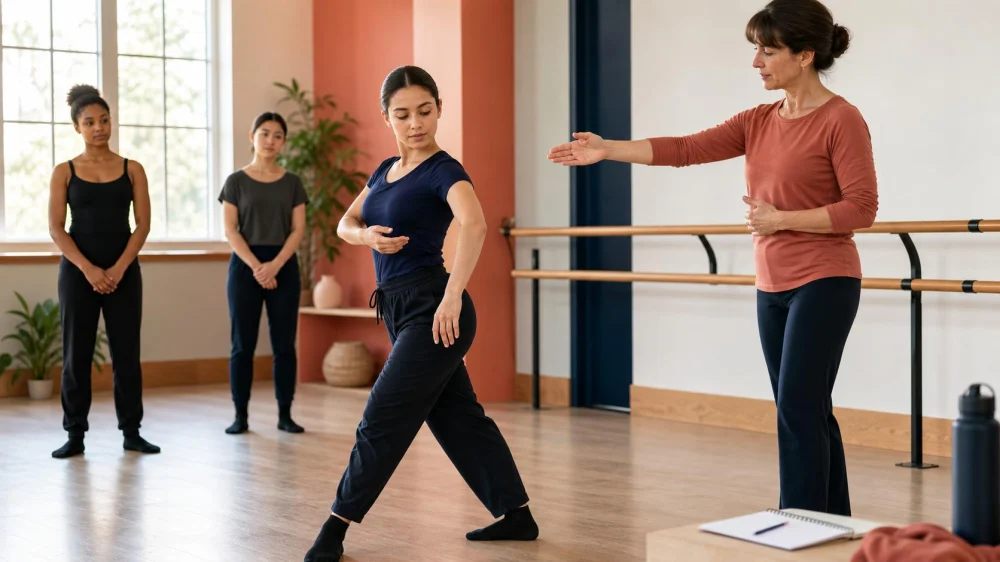
When a dance teacher gives a correction, stop guessing and capture the smallest actionable cue: which movement, body part, direction, timing, quality, or musical count should change? Repeat it in your own words if class structure allows, apply only that change in the next attempt, and compare the result. After class, record the teacher’s wording, context, and one practice drill.
A correction is information about a specific attempt, not a verdict on the dancer. Some cues are individual; others are given to the whole room so everyone can check the same idea.
Virginia Ballet Company & School / virginia ballet company
5595 Guinea Rd, Fairfax, VA 22032, USA
Listen for the exact cue
Finish the movement safely, face the teacher, and notice whether the cue addresses placement, pathway, weight, alignment, rhythm, focus, energy, spacing, or performance quality. Keep the original wording long enough to avoid changing its meaning. “Land through the foot on count six” is more useful than “be better.”
Identify the context: side, step, combination, tempo, partner, floor direction, and where in the music it occurs. Watch the demonstration from a position that does not block others. If the teacher corrects another dancer publicly, check your own version without copying a body-specific adjustment that may not apply.
Bella Ballerina / bella ballerina leesburg
LeesburgLoudoun CountyVirginia
1053 Edwards Ferry Rd NE, Leesburg, VA 20176, USA
Apply it in the next attempt
- Name one observable change before the music starts.
- Mark it slowly if the teacher permits and space is clear.
- Keep the rest of the combination familiar rather than adding several new experiments.
- Perform the cue at the requested tempo and direction.
- Notice one result: balance, sound, timing, spacing, effort, or teacher confirmation.
- Reset without stopping traffic or asking for feedback during someone else’s turn.
If a cue causes pain, dizziness, numbness, instability, or confusion about safe execution, stop and tell the teacher. Do not force range, turnout, height, backbend, speed, or joint position to imitate a shape.
Record it after class
Use a short note structure: date, class, combination, original cue, your interpretation, what changed, what still feels unclear, and the next drill. Add counts or a simple pathway sketch if useful. Avoid diagnosing anatomy or rewriting the instruction with unsupported technical language.
When video is allowed, link the note to one short clip and record whose consent and studio policy apply. Do not post classmates or teacher material without permission. Review the note before the next class, then choose one cue to carry into warm-up or marking instead of trying to rehearse every correction at once.
Ask useful questions
Choose a quiet moment defined by the teacher—after the combination, during an assigned question period, or after class. Ask a narrow question: “On count six, should my weight finish over the front foot?” or “May I mark the arm pathway once?” Show the step only if there is clear space and the teacher invites it.
Do not demand a full private lesson during group class or argue from a video taken at another angle. If the cue needs sustained individual work, ask whether a private lesson, office hour, slower-level class, or specific drill would be appropriate. Confirm what to practice and what not to repeat alone.
Correction checklist
- Exact teacher wording heard
- Movement, side, count, and context identified
- Individual versus group cue distinguished
- One change selected for the next attempt
- Result observed without forcing range
- Pain or unsafe confusion reported
- Short after-class note created
- Practice drill and follow-up question confirmed
Limitations
Teaching language varies by dance style, school, level, body, and choreography. A written cue cannot replace live observation. Pain, injury, disability, hypermobility, pregnancy, or medical restrictions may require adaptation with the teacher and a qualified health professional.
FAQ
Was the correction only for me?
Ask or observe how it was delivered. Group corrections often invite everyone to check; body-specific cues should not be copied automatically.
Should I write during class?
Only if the teacher and class flow allow it. Otherwise capture a few words immediately after class.
What if I do not understand?
Ask one specific question at an appropriate time and show where your interpretation breaks down.
How many cues should I practice?
Prioritize one or two with the teacher’s guidance. More notes do not guarantee better learning.
What if a correction hurts?
Stop, report the symptom, and do not force the movement. Pain is not proof that the cue is working.
Evidence notes
The controlling evidence is the teacher’s current demonstration, choreography, class terminology, and direct observation of the dancer. A useful correction becomes testable when it names the movement, context, and observable change. Notes and video can support recall but do not override live teaching or individual safety limits.
Conclusion
Corrections become manageable when they are made small and specific. Hear the actual cue, apply one change, observe the result, record the context, and ask the next focused question without turning feedback into self-judgment.
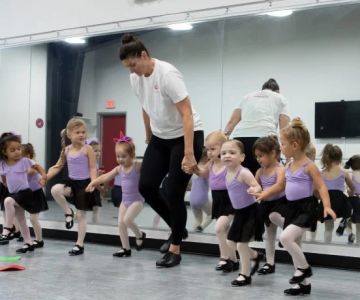
 Oklahoma Dance Center I Home of Oklahoma Youth Ballet5.0 (3 reviews)
 Bollycurves | Bollywood Dance + Fitness + Yoga4.0 (237 reviews)
 Black Cat Belly Dance5.0 (3 reviews)
 The Gallery Dance Collective3.0 (2 reviews)
 DPAC Texas5.0 (24 reviews)
 Charlotte Dance Alliance4.0 (25 reviews)
 What is Salsa Rueda de Casino? The Cuban Group Dance
 How I Learned to Use Motion Capture for Audience Interaction — My Story
 The Best Mindset for Learning and Retaining Dance Choreography
 What is Line Dancing? Beyond the Electric Slide
 My Experience With Dance and Mindset Coaching — My Personal Growth
 How to Give a Performance Even If You're Not a Professional: Tips for Beginners