
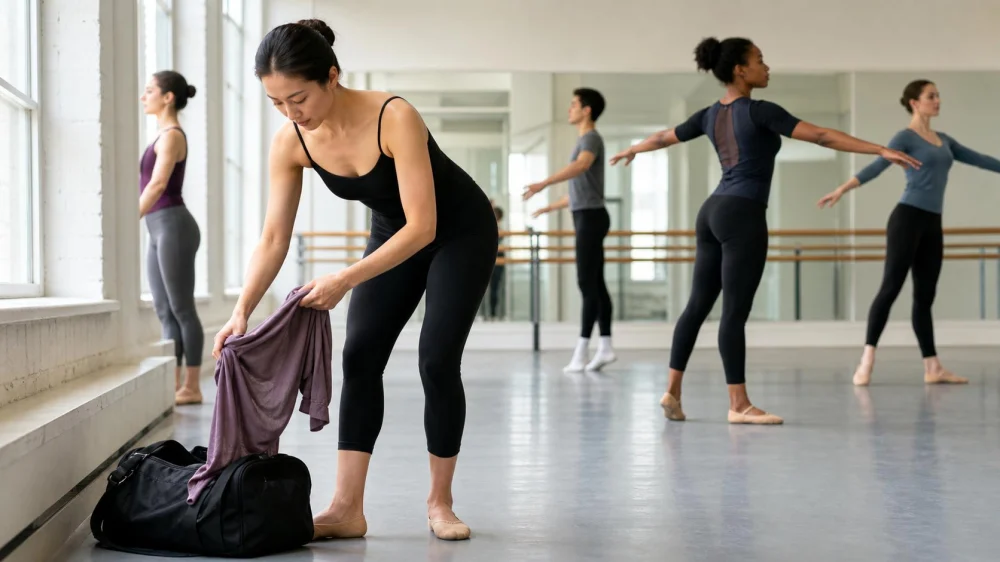
Dance Class Layers: Warm Up, Move Freely, Cool Down
On this page
Quick answer
Start dance class with a fitted base layer that meets the studio dress code, then add one lightweight layer you can remove without leaving clothing on the floor. The outer layer should stay close enough to the body for the teacher to see alignment and avoid catching on the barre, partners, or props. Reapply a dry layer after class if the room or trip home is cool.
This guide is for dancers and caregivers in the United States planning clothing for technique class, rehearsal, or a workshop. Ballet, contemporary, jazz, tap, hip-hop, ballroom, cultural dance, adaptive programs, and other classes use different clothing and footwear standards. The teacher and studio policy control.

The Little Gym of Pearland / the little gym pearland
9607 Broadway St, Pearland, TX 77584, USA
Why dancers use clothing layers
Layering lets a dancer adjust clothing as the room, activity, and personal comfort change. A cool studio at arrival may feel different after barre, center work, traveling combinations, or rehearsal. One removable layer is usually easier to manage than arriving in a heavy garment that becomes distracting.
A useful dance layer should:
- allow the full movement range expected in class;
- stay secure during turns, jumps, floor work, and partner activity;
- let the instructor see enough alignment for the class format;
- avoid long cords, loose pockets, hardware, and dangling fabric;
- come off quickly in an approved place without interrupting others; and
- fit in a bag or designated cubby rather than becoming a floor hazard.
More clothing does not automatically make movement safer. A layer that traps excessive heat, restricts breathing, hides foot placement, or changes traction can create new problems. Clothing supports comfort and visibility; it does not replace a progressive warm-up, technique, hydration, rest, or medical guidance.

Galactic Dance Studio / quinceanera choreography near me
8501 Long Point Rd, Houston, TX 77055, USA
Choose a movement-ready base layer
The base layer is what remains after warm-up clothing comes off. It should meet the dress code and stay secure through the entire class.
Check the shoulders and arms. Raise the arms overhead, open them to the side, and reach forward. Necklines and straps should remain in place without painful compression or repeated adjustment.
Check the torso. Bend, twist, and lengthen through a comfortable range. The fabric should not roll, expose more than intended, or restrict breathing. If the teacher needs to see spinal or pelvic alignment, bulky garments may not be appropriate.
Check the hips and knees. Try a shallow plié or squat, lunge, and gentle knee lift. The waistband should remain stable, seams should not strain, and fabric should not bunch behind the knee.
Check the feet and hems. Leggings, tights, and pants should not extend under the heel unless designed and approved for the footwear and style. Wide hems can hide foot placement or catch during traveling steps.
Check opacity and support. View the garment under bright light and through bending positions. Choose approved undergarments or dance supports that remain comfortable and discreet. Ask the studio about gender-inclusive and adaptive options rather than guessing what is allowed.
Choose a removable warm-up layer
A practical outer layer might be a fitted wrap top, close cardigan, light sweatshirt approved by the teacher, warm-up pants, leg warmers, or another dance-specific garment. The right choice depends on the class.
Use these selection rules:
- Close, not tight. It should follow the body without cutting off movement or circulation.
- Secure closures. Ties should be short and tucked; zippers and snaps should not scratch partners, floors, or equipment.
- Easy removal. You should not need to remove shoes, leave the room, or pull a tight garment over elaborate hair just to take it off.
- Manageable sleeves. Sleeves should not cover the hands, trail through floor work, or slide down constantly.
- Appropriate length. The layer should not hide the feet, drag, or wrap around the legs during turns.
- Breathable enough for the activity. Heavy fabric may become uncomfortable quickly in a vigorous class.
Do not use scarves, blankets, oversized hoods, long open-front garments, or unsecured fashion layers unless the teacher specifically incorporates them. A familiar street garment can behave differently during spinning, partnering, or floor work.
A before-class layering checklist
- Read the dress code. Confirm required color, garment type, footwear, hair, jewelry, and whether warm-up layers are allowed after class begins.
- Check the room and travel conditions. Plan for the studio, lobby, outdoor temperature, and trip home rather than wearing one layer for every setting.
- Do a movement test. Practice arm reaches, a shallow plié, knee lifts, turns at walking speed, and floor transitions used in the class.
- Check closures and edges. Remove pins, loose drawstrings, hard toggles, sharp zippers, and unsecured pockets.
- Choose the removal point. Ask whether layers come off after warm-up, at the barre, between combinations, or only with teacher permission.
- Choose the storage point. Use a bag, cubby, hook, or designated edge. Never drop clothing where dancers travel.
- Pack a dry post-class layer. A damp warm-up garment may not be comfortable for cooling down or commuting.
- Label personal items discreetly. Use an inside tag or school-approved method without displaying unnecessary personal information.
For children, rehearse taking off and storing the layer independently. A garment that requires a caregiver to enter class can interrupt the student and teacher.
Common fit and safety problems
The teacher cannot see alignment. Ask whether the layer should come off after the first exercises or whether a closer-fitting option is needed.
The dancer overheats. Remove the approved outer layer at a natural pause, drink water according to class practice, and tell the teacher about dizziness, nausea, confusion, chills, or unusual weakness. Stop activity for concerning symptoms.
The garment rides up or falls down. Do not spend class repeatedly pulling it into place. Adjust the size, waistband, straps, or design before the next session.
Clothing catches during floor work. Check long sleeves, loose waist ties, pockets, zippers, and textured fabric. A garment suited to standing barre may not suit rolling or sliding.
A dancer has sensory needs. Discuss seams, compression, tags, fabric, temperature, and change routines with the teacher. A planned alternative that still supports instruction and safety is better than silently enduring distress.
A layer covers an injury support. The instructor may need to know about an approved brace, tape, or restriction. Clothing should not conceal a new injury or be used to self-treat pain. Follow clinician and teacher guidance.
Studio rules and important limits
This article reflects general dance-class practice: clothing should permit movement, keep the floor clear, and allow the teacher to give useful corrections. It does not prescribe a universal dress code or claim that a particular fabric prevents injury.
Dance styles, age groups, cultural practices, performance requirements, gender expression, disability access, and studio policies differ. Ask for a specific approved alternative when the standard option creates a fit, medical, religious, sensory, or access concern.
Stop dancing and seek appropriate help for chest pain, fainting, severe breathing difficulty, a sudden injury, new neurological symptoms, or another emergency. In the United States, call 911 for a life-threatening event.
Frequently asked questions
Can I wear a hoodie during dance warm-up?
Only if the studio allows it and the hood, strings, pockets, and fit do not interfere with visibility, partnering, floor work, or equipment. A close-fitting layer is often easier to manage.
When should I remove warm-up clothes?
Follow the teacher’s direction. Many classes use a natural transition after early exercises, but timing depends on style, room, and lesson plan.
Are leg warmers required?
Not universally. Some dancers use them for comfort, while some studios restrict them because they cover alignment or do not fit the class style. Ask before purchasing.
Can I tie a sweatshirt around my waist?
That can create swinging sleeves, hidden alignment, or a snag during movement. Store the sweatshirt in the designated area unless the teacher explicitly permits waist tying.
What should I wear after a sweaty class?
Change into a dry approved layer when practical, especially before entering cool outdoor air or transportation. Pack wet items separately and wash them according to the garment instructions.
What if the required dress code does not work for me?
Contact the studio before class and explain the practical concern. Ask for a specific alternative that supports movement, instruction, safety, identity, and access without requiring you to disclose more personal information than necessary.
Next steps
Confirm the class dress code, choose a secure movement-ready base layer, and add one easy-to-remove warm-up piece. Test arms, hips, knees, hems, and floor transitions. Plan exactly when and where the layer will be stored, pack a dry option for after class, and ask the teacher about any fit, access, sensory, medical, or style-specific concern before movement begins.




 studio shira4.0 (52 reviews)
 Jazzercise5.0 (60 reviews)
 Academy of Music and Arts - Mandarin5.0 (8 reviews)
 Dance Studio Elegance0.0 (0 reviews)
 Altitude Fitness Highland Village4.0 (37 reviews)
 New Hope Dance & Drama at New Hope Performing Arts Center4.0 (7 reviews)
 How to Build Endurance for Full-Length Dance Classes
 How to Choose Dance Clothes That Are Functional and Stylish
 How to Prepare for a Dance Class When You're a Complete Beginner
 How I Learned to Teach Dance for People with Parkinson’s and Movement Challenges
 The History of Hip-Hop Dance: From the Bronx to Your Studio
 How I Learned to Choreograph for a Live Orchestra — My Story