Build a simple dance practice notebook that captures cues, questions and progress without overwhelming you.
Write down a useful focus
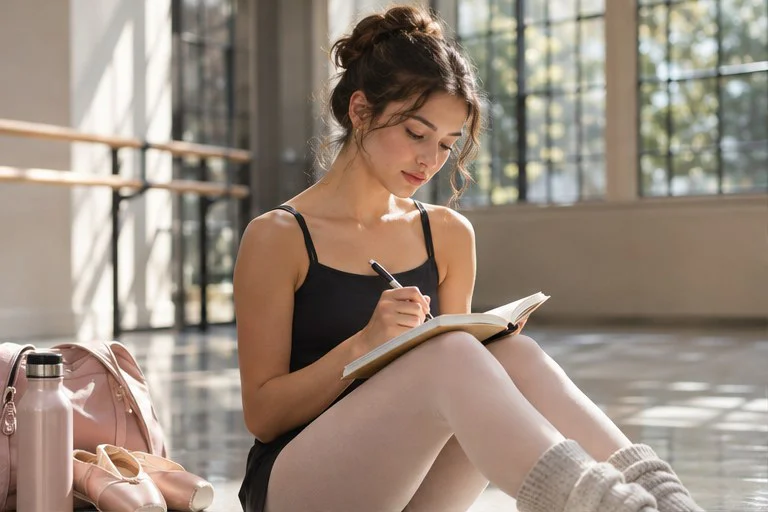
A short note after class can preserve an instruction that made a movement easier to understand. Record the date, class and one focus, such as finding the beat or remembering a transition. You do not need to transcribe every exercise.
Separate a cue from a conclusion
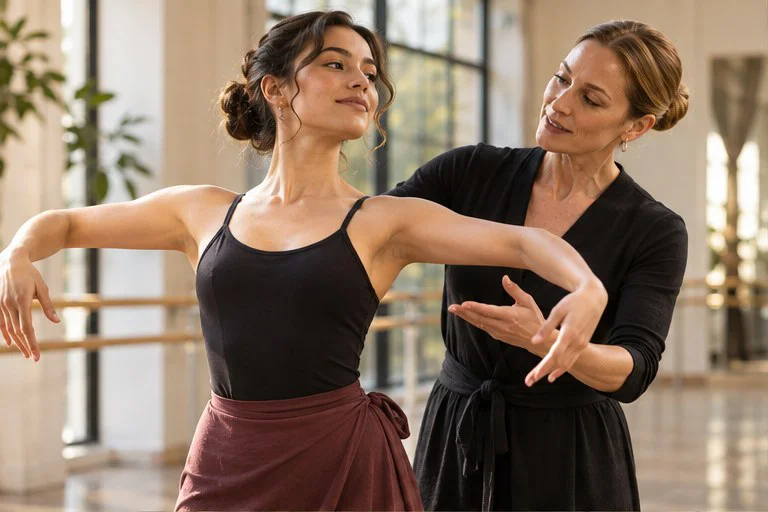
Write what the teacher actually suggested and the context in which it was given. A cue for one dancer or one exercise may not apply to every movement. If you do not understand an instruction, mark it as a question rather than treating your interpretation as fact.
Describe sequences in your own words
Use a short list, directional words or a sketch to recall the order of a combination. Ask the studio about its recording policy before photographing or filming. Respect classmates and do not share recordings without permission.
Plan a small review
Choose one item to revisit before the next class and ask your teacher what can be practised safely at home. Use a suitable space and avoid attempting advanced movements from a note alone. Stop if something hurts and seek appropriate advice.
Review over time
At the end of a month, look for questions that have been answered and topics you still want explained. Progress can include greater confidence in following instructions, not just a longer list of movements. Bring one clear question to your next class.
Frequently asked questions
Should I contact the studio before deciding?
Yes. Ask about the specific class or event, current costs and policies, and any needs that matter to you. Details can change between programs.
What if the first option is not right for me?
Discuss alternatives with the teacher or organizer. Another level, schedule or program may be a better fit.
Explore more learn-practice guides or find a dance studio and confirm its current offerings.