Dance Class Observation: What to Watch Before Enrolling
On this page
Quick answer
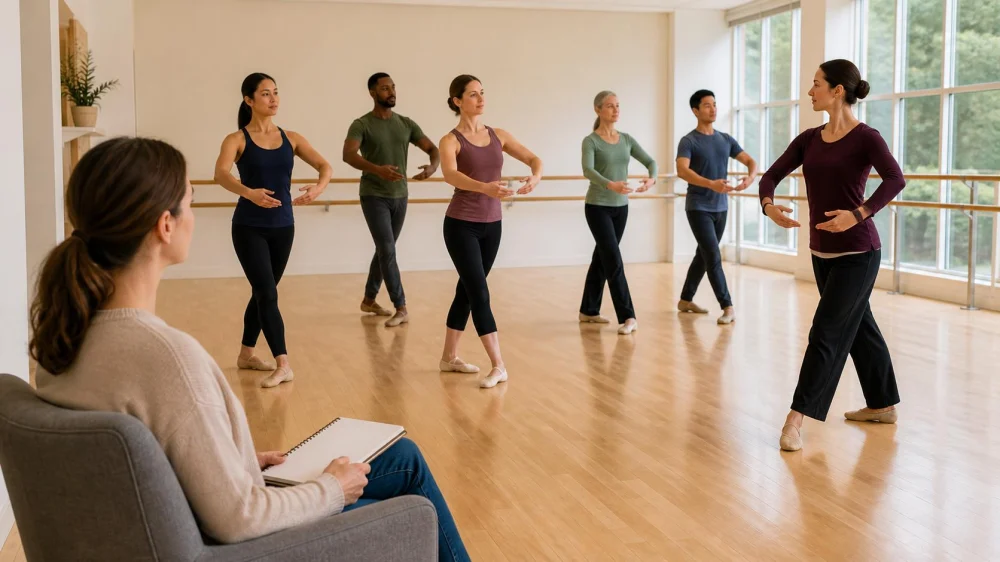
Before enrolling in a dance class, observe the same level, teacher, and schedule you expect to attend. Watch how combinations are explained, how corrections and options are offered, whether dancers have safe space, and how questions are treated. Compare what you see with the written description, then take a trial class before making a long commitment.
Luna Aerial Dance & Performing Arts / luna aerial
FrederickFrederick CountyMaryland
4750 Winchester Blvd #7, Frederick, MD 21703, USA
Match the class goal and level
A dance class observation is a planned visit used to evaluate teaching, level, environment, and group expectations without relying only on a studio description. It is especially useful because “beginner,” “open,” and “intermediate” are not standardized across United States studios.
Ask what the class is designed to develop: social participation, foundational technique, conditioning, performance choreography, examination preparation, competition, or professional training. Then notice the assumed skills. Does the teacher explain vocabulary, demonstrate slowly, and build a sequence, or expect dancers to pick up material immediately?
A class can be excellent yet unsuitable for your current goal. Choose the one that supports the next useful step, not merely the most advanced label available.
Class Act Performing Arts / class act studios
EdgewaterAnne Arundel CountyMaryland
161 Mitchells Chance Rd, Edgewater, MD 21037, USA
Watch how the teacher teaches
Look beyond the teacher's own performance. Strong instruction makes the task visible and gives dancers a way to improve.
- Does the teacher state the purpose of an exercise?
- Can students see and hear demonstrations from different parts of the room?
- Are rhythm, direction, weight transfer, and safety cues explained clearly?
- Do corrections identify an action the dancer can change?
- Are movement options presented without humiliation?
- Does the teacher ask consent before hands-on correction?
- Are questions answered at a suitable point without derailing the group?
- Does the class progress from preparation to more demanding movement?
Notice whether attention is distributed across the class. Constant praise for only the strongest dancers or correction delivered through ridicule can signal a poor learning environment.
Notice the space and class culture
Check floor condition, usable space, mirrors, barres, ventilation, temperature, lighting, sound, equipment storage, water access, and exit routes. Count how many dancers are moving at once and whether traffic patterns are explained before traveling steps.
Class culture appears in small moments: how late arrivals enter, whether dancers make space for one another, how mistakes are handled, and whether boundaries are respected in partner or floor work. Watch whether the teacher stops an unsafe pattern rather than allowing speed or enthusiasm to override control.
If accessibility, sensory conditions, communication, or changing facilities matter to you, verify those needs directly. An observation from the doorway may not reveal the complete member experience.
Use a structured observation
- Contact the studio. Ask whether observation is allowed and whether consent, privacy, or child-safeguarding rules limit where you may sit.
- Confirm the exact class. Match teacher, level, age group, style, date, and normal duration.
- Arrive early. Learn where to wait without blocking dancers or filming.
- Use four headings. Record notes on level, instruction, environment, and policies.
- Watch transitions. Entry, warm-up, across-the-floor work, breaks, and dismissal reveal organization.
- Ask concise questions afterward. Clarify prerequisites, trial options, attire, costs, attendance, performances, and advancement.
- Try before committing. An observation shows the room; a trial shows how the teaching works for your body and learning style.
Decide whether to try or avoid
Best for a trial: the level matches the description, instructions are actionable, dancers have room, options are available, and staff answer practical questions clearly.
Not ideal without clarification: the class assumes unexplained prerequisites, the regular teacher is absent, or important costs and performance obligations are vague.
When to avoid: obvious hazards continue after being reported, consent is dismissed, humiliation is used as instruction, pain is treated as proof of effort, or the studio pressures you to sign a long agreement before reviewing terms.
Limitations and important notes
- One observation may not represent every week, substitute teacher, cast period, or recital season.
- Do not photograph or record without explicit permission from the studio and the people involved.
- A technically demanding class is not automatically unsafe; the key is appropriate prerequisites, progression, space, and supervision.
- Ask a qualified healthcare professional about restrictions when injury, surgery, pregnancy, or a medical condition makes participation uncertain.
- Read tuition, withdrawal, costume, recital, competition, and make-up terms before paying.
Frequently asked questions
Can I observe without taking a trial class?
Studio policies vary. Some allow observation, some offer a trial instead, and others restrict viewers for privacy or safeguarding. Contact the studio first.
Should I observe a beginner class if I have prior experience?
Observe the level the studio recommends after discussing your background. Different syllabi and styles can make a foundational class the right placement even for an experienced dancer.
What if the observed class is unusually small?
Ask about normal enrollment and attendance. Spacing, teacher attention, and energy can change significantly when the full group is present.
Is a quiet class a bad sign?
No. Some methods emphasize concentrated work. Evaluate whether communication is clear, dancers can ask necessary questions, and feedback remains respectful.
When should I take a second trial?
Try another class when schedule, instructor, level, or style could materially change the experience. Compare using the same criteria rather than relying on mood alone.
Conclusion and next steps
Choose one class that matches your goal, observe its normal rhythm, and write down evidence under level, teaching, environment, and policies. Ask targeted questions, then use a trial to test the fit. Enroll when the learning path is clear and the everyday culture supports sustainable practice.
Evidence note: These recommendations reflect common dance-education, studio-safety, and consumer-comparison practices. Exact teaching methods, prerequisites, and policies come from the studio and instructor.
 Boulder Body Wear4.0 (177 reviews)
 Bethesda Conservatory of Dance4.0 (41 reviews)
 Gocha Shorena Center of Ballroom Dance5.0 (49 reviews)
 Redding Jazzercise Center5.0 (10 reviews)
 Steps of Faith Dance Studio5.0 (31 reviews)
 Fred Astaire Dance Studios - Houston4.0 (36 reviews)
 10 Things Every Beginner Hip‑Hop Dancer Wishes They Knew
 The Best Dance Styles for Improving Self-Esteem and Body Image
 My Experience With Dance in Different US Cities — My Travel Story | Creative Edge Dance Studio
 How I Learned to Teach Aerial Hoop Dance — My Journey of Discovery
 The Science of How Learning Dance Benefits Your Brain
 What is 'Freestyle' Dancing and How to Get Started