
Dance Floor Feels Slippery: Stop and Tell the Studio
On this page
Quick answer
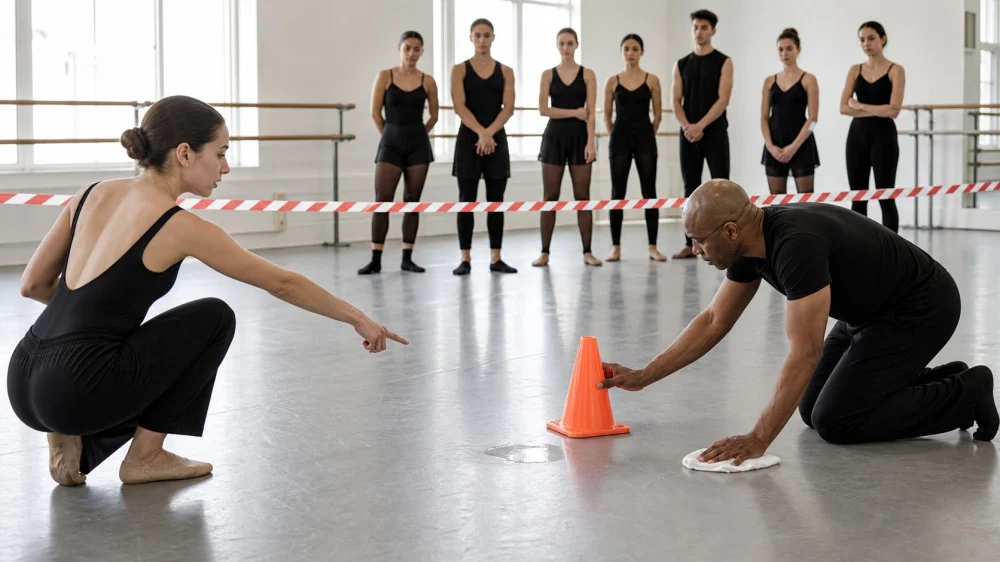
If a dance floor suddenly feels slippery, stop moving, warn nearby dancers, and tell the instructor exactly where it happened. Do not test the patch with faster turns, add water or powder, or clean it with an unknown product. The studio should isolate the area, identify moisture, residue, damage, or footwear issues, and approve the floor before class resumes.

Studio Dhoom - Dance & Fitness / studio dhoom
22621 Amendola Terrace #120, Ashburn, VA 20148, USA
Stop before testing it again
Bring your movement under control without an abrupt jump or slide. Step to a known stable area, signal the instructor, and keep others away. A small slick patch can be difficult to see and may affect the next dancer differently.
Do not use a spin, kick, or deep lunge to prove the surface is unsafe. The first loss of traction is enough reason to pause.

Mythili Dance Academy / mythili dance academy
12996 Nimble Dr, Frisco, TX 75035, USA
Possible causes
- Water, sweat, or a spilled drink.
- Cleaning-product residue or incomplete drying.
- Dust, rosin, powder, wax, or outside grit.
- Worn, dirty, or inappropriate shoe soles.
- A loose seam, surface damage, or raised tape.
- Humidity, condensation, or a building leak.
A floor can also feel “too sticky,” increasing stress on knees and ankles during turns. Both excess and insufficient traction deserve attention.
Report the exact location
- Name the room and approximate floor mark.
- Describe whether it felt wet, dusty, oily, loose, or unusually smooth.
- State the movement and shoe type.
- Note any visible spill, stain, seam, or debris.
- Tell the instructor whether anyone slipped or fell.
- Keep the area clear until staff inspect it.
Check shoes safely
Sit in a stable place and inspect soles for dust, moisture, gum, worn suede, loose taps, detached rubber, or embedded debris. Use only the studio- and manufacturer-approved cleaning method. Keep street shoes off dedicated floors where required.
Do not apply water, soda, oil, hairspray, rosin, or powder to shoes or floors unless the facility explicitly uses an approved method. These substances can create inconsistent traction and contaminate the surface for others.
What the studio should do
Staff should stop traffic, mark the area, inspect the floor and adjacent ceiling or equipment, and use a compatible cleaning procedure. The product label and floor manufacturer's instructions matter; the wrong cleaner can leave residue or damage the finish.
For a leak, loose flooring, damaged seam, or recurring traction problem, the area may need to remain closed for maintenance. A dry-looking patch is not automatically ready.
Resume only after a check
The instructor should confirm the area is clean, dry, intact, and appropriate for the class footwear. Begin with walking and simple weight shifts before turns, jumps, or partner work. Modify choreography or relocate class when uncertainty remains.
Different styles require different traction. Tap, ballet, ballroom, jazz, contemporary, and street styles may use distinct surfaces and shoes; one universal “grip” is not suitable.
If someone falls
Stop the class and protect the person from further collision. Do not move someone with suspected head, neck, back, hip, or serious limb injury unless immediate danger requires it. Follow the studio emergency plan and call emergency services for loss of consciousness, severe pain, deformity, neurological symptoms, uncontrolled bleeding, or other urgent signs.
Document the location, condition, footwear, witnesses, and response after immediate care. A head impact with symptoms needs concussion evaluation before return.
Class checklist
- Floor is dry, clear, flat, and free of loose tape.
- Required footwear is clean and secure.
- Water bottles and bags stay outside movement paths.
- Spills are reported immediately.
- No unauthorized powder or spray is used.
- Students know the stop signal and exits.
- Recurring areas are documented for maintenance.
Important limitations
This article is general studio-safety information, not flooring maintenance, injury diagnosis, or legal advice. Floor systems, dance styles, footwear, cleaners, and facility rules vary. Studio staff and qualified flooring professionals should determine whether a surface is ready.
Sources and evidence notes
- Dance floor manufacturers: product-specific cleaning, finish, footwear, and maintenance guidance.
- Occupational safety resources: principles for controlling slip, trip, and fall hazards.
- Centers for Disease Control and Prevention: concussion recognition and response guidance.
- The studio emergency plan: controlling procedure for area closure, injury response, and reporting.
Frequently asked questions
Can I use water on suede soles for more grip?
Do not improvise. Follow the shoe maker and studio method; water can create temporary, uneven traction and damage materials.
Should dancers use rosin?
Only where the studio and floor manufacturer permit it. Rosin can build up, become slippery, or damage some surfaces.
What if only my shoes slip?
Stop and inspect them, but still tell the instructor. Sole wear, contamination, and surface compatibility need checking.
Can class continue around a wet spot?
Only if staff can create a secure exclusion zone and the choreography stays clear. Relocation or stopping may be safer.
Conclusion
A slippery dance floor is a shared hazard, not a challenge to push through. Stop, warn others, report the exact place, and let staff identify and correct the cause with approved methods. Resume gradually only after the floor, footwear, and movement plan are checked.


 Custom Fitness4.0 (15 reviews)
 The Little Gym of Bellevue-Redmond4.0 (68 reviews)
 The Professional Dance Company5.0 (6 reviews)
 Dance Studio B5.0 (8 reviews)
 Bailando Brillando4.0 (16 reviews)
 The Well Studio4.0 (71 reviews)
 How I Learned to Use AI-Generated Backdrops in My Dance Performance — My Story
 How I Learned to Use Time-Travel Themes in My Choreography — My Personal Story
 How to Create a Dance Routine for a Wedding Party – A Step-by-Step Guide
 How to Care for Your Feet as a Dancer: Prevention and Recovery
 My Journey from Beginner to Competitive Dancer in One Year
 My Experience With Dance Camps as a Teen — How It Shaped Me