
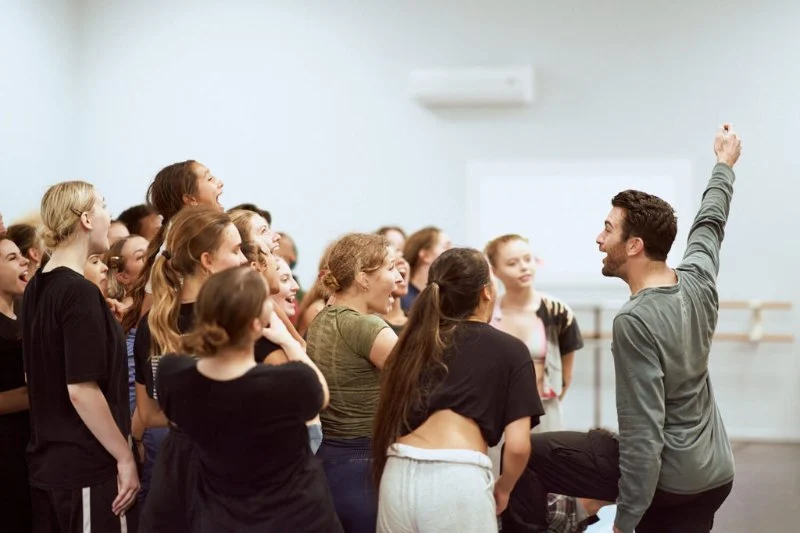
How I Learned to Use Real-Time Audience Feedback for My Dance Performance — My Story
- Introduction: The Importance of Audience Feedback
- My Journey with Real-Time Audience Feedback
- Challenges of Using Live Feedback in Dance
- How Real-Time Feedback Helped My Dance Growth
- Real-Life Example: A Dance Performance Transformed
- Final Thoughts on Audience Feedback in Dance
Introduction: The Importance of Audience Feedback
As a dancer, feedback is crucial to improving your performance and connecting with the audience. While traditional forms of feedback, like post-performance reviews, are important, real-time audience feedback provides instant reactions and insight into how your performance is being received. By learning to use these live reactions, dancers can adjust their approach on the spot, refining their movements, energy, and overall performance to better engage the audience. In this article, I'll share how I learned to incorporate real-time audience feedback into my dance performances and how it changed my approach to performing.
My Journey with Real-Time Audience Feedback
When I first started performing, I relied heavily on rehearsals and post-performance critiques from fellow dancers and instructors. However, I often felt disconnected from the audience’s immediate reaction. I would wonder whether my performance was truly resonating with the people watching or if I was missing something. That’s when I decided to experiment with real-time audience feedback during my performances.
The first step in this journey was deciding how to gather feedback during my shows. I initially started by simply observing the crowd’s reactions — facial expressions, body language, and applause — to gauge how well my performance was going. This gave me a vague sense, but I wanted more concrete feedback. So, I began engaging with the audience in a more direct way, using small interactions during breaks to ask for quick thoughts or reactions.
Challenges of Using Live Feedback in Dance
While real-time audience feedback seemed like a great idea, it didn’t come without its challenges. Here are a few obstacles I faced:
1. Overwhelming Emotions
At first, I was so focused on the audience’s reactions that I found myself getting distracted by their feedback, whether positive or negative. It was easy to feel overjoyed when the crowd cheered or deflated when I sensed disinterest. Learning to stay composed and focused on my performance, while still integrating feedback, was a difficult but necessary step.
2. Balancing Instant Feedback with Rehearsed Movements
Dance performances require precision and timing, and incorporating real-time feedback didn’t always allow for instant changes in choreography. I quickly realized that I needed to find a balance between responding to live reactions and maintaining the integrity of the movements I had rehearsed. Some feedback was immediate, but not all could be applied in the moment without disrupting the flow of the performance.
3. Understanding Non-Verbal Feedback
Audience feedback isn’t always vocal. A lot of it comes through non-verbal cues like body language, clapping, or even the silence between movements. Interpreting these cues correctly was another challenge, especially since they could be ambiguous. Learning to distinguish between constructive feedback and distractions was crucial for me as I began to trust the process.
How Real-Time Feedback Helped My Dance Growth
Despite the challenges, the use of real-time feedback transformed my performances. Here’s how:
1. Improved Audience Connection
By learning to read the audience's reactions, I started to connect more deeply with them. I began to understand which parts of my performance were engaging the crowd and which parts needed adjustment. This allowed me to be more responsive and adaptive, creating a more engaging and memorable experience for the audience.
2. Boosted Confidence and Adaptability
Receiving instant feedback during performances helped boost my confidence. It reassured me that I was on the right track when the audience responded positively. At the same time, when I saw areas for improvement, I was able to make small adjustments on the fly without losing the flow of my routine. This adaptability became a valuable skill in my dance repertoire.
3. Enhanced Performance Quality
Over time, the ability to incorporate real-time feedback allowed me to fine-tune my performances. I started incorporating crowd-pleasing elements and adjusting my energy levels based on the audience’s vibe. This made my performances feel more dynamic and in tune with the people I was performing for.
Real-Life Example: A Dance Performance Transformed
During a recent performance, I was able to use real-time feedback to completely transform my show. In the middle of my routine, I noticed that the audience was responding more to the upbeat sections than the slower, more introspective ones. I adapted by picking up the pace and shifting my energy to match the crowd’s enthusiasm. The difference was immediate. The audience became more engaged, and I felt more confident and connected. The result was a performance that was not only technically strong but also emotionally resonant with the crowd.
Final Thoughts on Audience Feedback in Dance
Real-time audience feedback is an invaluable tool for dancers. While it can be challenging to manage, it offers an opportunity for growth and deeper connection with your audience. By learning to use live feedback effectively, dancers can refine their performances, improve audience engagement, and build lasting connections with their viewers. If you're looking to enhance your dance skills and learn how to make the most of audience feedback, consider working with a community like 【Creative Edge Dance Studio】 for expert advice and training.

 BollyX with Shubha- Cardio fitness classes5.0 (103 reviews)
 CityDance Conservatory0.0 (0 reviews)
 On Your Toes4.0 (156 reviews)
 The Martelly School of Ballet and Modern Dance ---- Marshall Ballet Theatre5.0 (3 reviews)
 Parkrose Ballroom4.0 (32 reviews)
 BC Discoveries Dance & Theater Arts Co4.0 (18 reviews)
 How to Give and Receive Constructive Feedback in Dance Class: Key Strategies
 How Dance Apps Improved My Skills: A Personal Journey and What Worked for Me
 My Story of Performing a Dance Show in the Metaverse: A Unique Experience
 The Role of Breathwork in Dance Performance and Execution
 How to Develop Faster Footwork for Any Dance Style
 Dance Classes for Seniors: Benefits and What to Look For