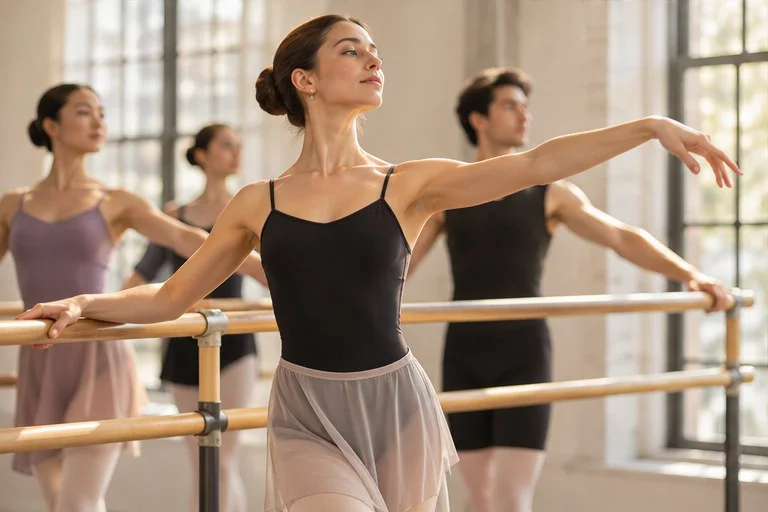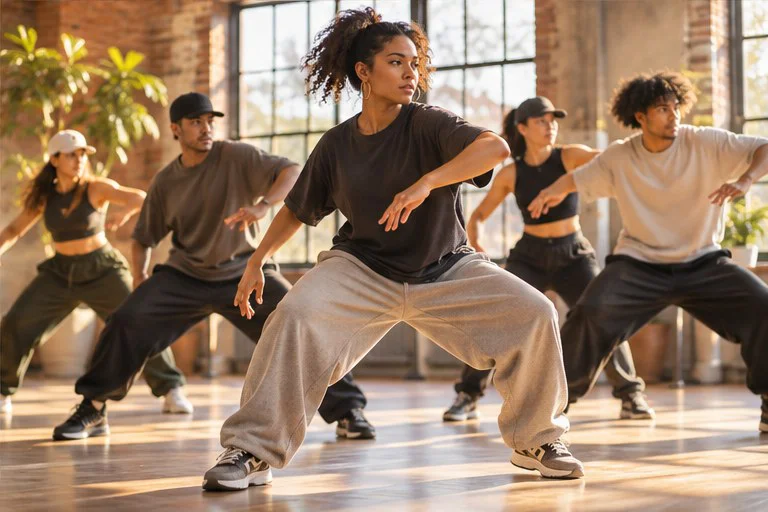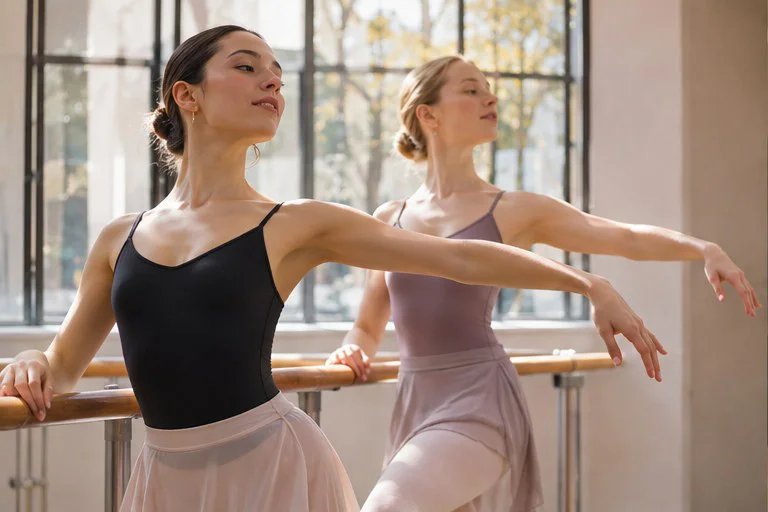
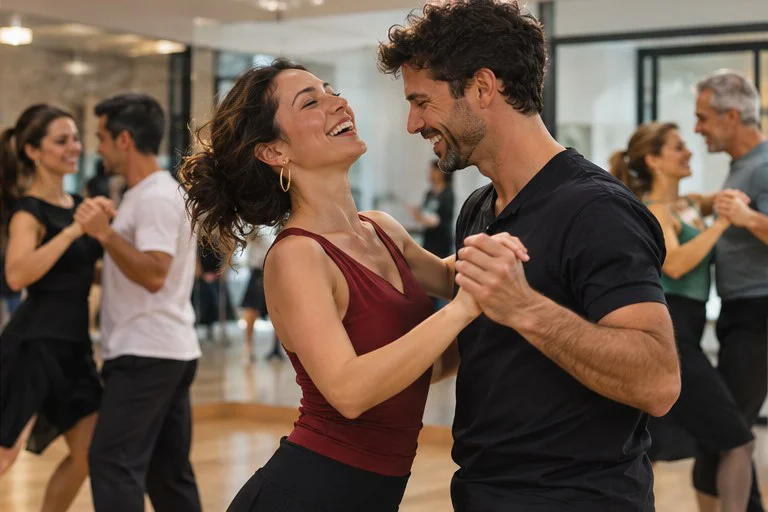
Prepare for a beginner partner dance class, from choosing a style to communicating with a partner.
Pick an entry point
Partner dance covers different styles, music and social settings. Listen to examples and ask a local teacher what their beginner course teaches. Choose the music and setting that interest you rather than assuming that one class represents every social dance.
Ask about partners and rotation
Some classes invite people to attend alone and may rotate partners; others have different arrangements. Ask the organizer whether a partner is needed, how rotation works and whether opting out is possible. Check the age group and experience level too.
Communicate and respect boundaries
Ask before taking a dance hold, listen to your partner and follow the teacher on appropriate contact and space. Either person can decline or stop a dance. If something is uncomfortable, speak to the instructor or organizer.
Prepare for the room
Confirm the dress code and footwear that the venue permits on its floor. Check the class duration, travel and whether there is a social session afterward. A trial class can help you assess the teaching pace without committing to a full course.
Continue at your own pace
After class, note the music you enjoyed and one question about the material. Ask where beginners can practise in a welcoming setting. Social dancing and competition have different goals; choose the path that fits your interests.
Frequently asked questions
Should I contact the studio before deciding?
Yes. Ask about the specific class or event, current costs and policies, and any needs that matter to you. Details can change between programs.
What if the first option is not right for me?
Discuss alternatives with the teacher or organizer. Another level, schedule or program may be a better fit.
Explore more dance-styles guides or find a dance studio and confirm its current offerings.