How to Ask Before Recording a Dance Class or Rehearsal
Table of contents
Quick answer
Ask the teacher or rehearsal director before recording, explain exactly what you want to capture, and confirm whether the video is for private review or public sharing. Other dancers, parents or guardians, the studio, venue, choreographer, and music rights may create separate limits. A “yes” to filming is not automatically a “yes” to posting. Keep the camera outside traffic paths, avoid capturing people who decline, and follow deletion or storage rules.
Luna Aerial Dance & Performing Arts / luna aerial
FrederickFrederick CountyMaryland
4750 Winchester Blvd #7, Frederick, MD 21703, USA
Understand the permission layers
The instructor may control class flow, while the studio sets facility policy. A choreographer may limit recordings of unfinished or proprietary material. Each visible person has privacy concerns, and minors require guardian and safeguarding procedures. Music, costumes, sets, guest artists, and a rented venue can have additional restrictions. A school showcase, audition, competition, or commercial project may follow different rules from an ordinary technique class.
Mythili Dance Academy / mythili dance academy
12996 Nimble Dr, Frisco, TX 75035, USA
Make a clear request
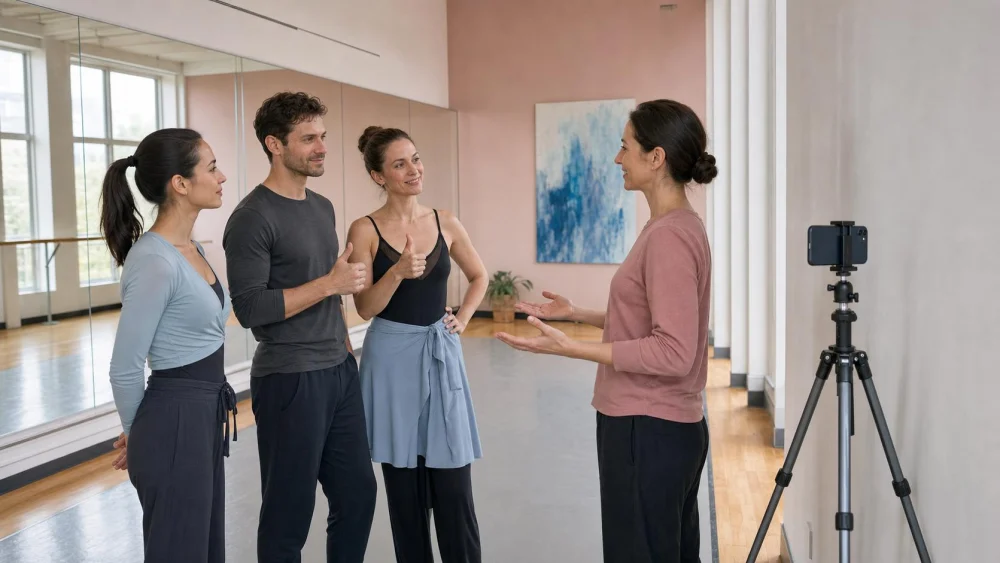
Ask before class or rehearsal rather than holding up the group at the final moment. State the section, camera position, people in frame, audio, purpose, storage period, and intended audience. Offer a narrow option such as filming only yourself during one marked run for private practice. Let staff choose the time and angle, and make it easy for anyone to decline without explanation or pressure.
Frame and place the camera safely
- Use a designated shelf or stable tripod only where staff approves.
- Keep exits, mirrors, barres, sound equipment, and dance pathways clear.
- Avoid floor-level phones, bags, cords, and stands that create trip hazards.
- Frame only the approved dancer or group and check reflections in mirrors.
- Disable notifications, flash, and distracting sounds.
- Stop recording when instruction, corrections, injuries, or private conversations begin.
Separate recording from sharing
Private technique review, sending a clip to the teacher, posting to a closed group, and publishing publicly are different uses. Before sharing, confirm who may receive it, whether editing or captions are allowed, how the school and choreographer may be named, and whether music or venue restrictions apply. Do not tag people, reveal schedules, identify children, or upload a clip simply because everyone noticed the camera.
Minors, guests, and sensitive rehearsals
Follow the studio’s written child-protection and media-consent process rather than collecting informal permission from a child. Guest teachers, audition panels, visiting dancers, adaptive classes, and rehearsals involving health or access information may require greater privacy. Some sessions should not be recorded at all. When consent cannot be verified for everyone in the frame, choose a solo setup later or use written notes instead.
Recording checklist
Confirm teacher, studio, choreographer, dancer, parent or guardian, music, venue, and event permissions as applicable. Record the approved purpose, section, people, camera location, audio, storage, recipients, posting platform, credit, deletion date, and contact for questions. Recheck on the day because cast, material, and policies change. Review the first seconds for mirrors, bystanders, names, and location details before keeping the file.
Limits and policy notes
This general U.S. guidance is not legal advice and cannot determine consent, copyright, publicity, privacy, contract, union, school, or safeguarding requirements for a specific recording. Laws and studio policies vary. Do not secretly record, bypass a no-phone rule, film minors without the required process, or publish copyrighted choreography or music based on assumption. Follow current written permissions and seek qualified legal guidance for commercial or disputed use.
Evidence notes
The strongest record is a clear, dated permission that identifies what may be recorded and how it may be used. A broad studio waiver may not answer every question about a new choreographer, guest teacher, minor, music track, or public post. Keeping the original request, reply, file name, capture date, and deletion commitment creates a practical audit trail and reduces reliance on memory.
Frequently asked questions
Can I record only myself without asking?
Still ask. The class, choreography, music, mirrors, venue, and people in the background may be restricted.
Does permission to record allow social media posting?
No. Confirm public sharing, platform, tags, music, and credit separately.
Can a parent film a child’s class?
Only under the studio’s safeguarding and media policy, which must account for other children in view.
What if another dancer walks into frame?
Stop or crop only if staff and the person approve. Delete the clip when consent cannot be resolved.
Are mirrors a privacy issue?
They can capture people and spaces outside the intended frame, so check reflections carefully.
Next steps
Send a narrow request before class, list who and what will be captured, separate private review from public posting, and accept any limits. Use the approved safe camera location, check mirrors and bystanders, store the file only as agreed, and delete it when permission is absent, withdrawn, or expired.
 Baltimore Dance Center Inc4.0 (10 reviews)
 Anytime Swingline & Dance Pro4.0 (17 reviews)
 Latin Dance Factory5.0 (4 reviews)
 Tumble Express Gymnastics4.0 (17 reviews)
 Jazzercise West Hartford5.0 (20 reviews)
 Houston Dance center5.0 (7 reviews)
 How I Found the Right Dance Studio for Me — A Guide Based on My Search
 How Dance Can Improve Your Creativity in Other Areas of Life
 My Journey With Dance and Community Outreach: Empowering Through Movement
 The title is clear, concise, and optimized for search engines while matching the article’s content.
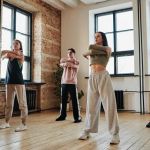 What is a Dance Workshop and Should You Take One? | Benefits of Dance Workshops
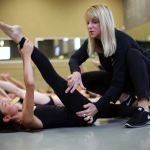 My Experience With Dance and Mindset Coaching for Personal Growth