Dance Studio Mirror Safety: Use Reflection Without Losing Floor Awareness
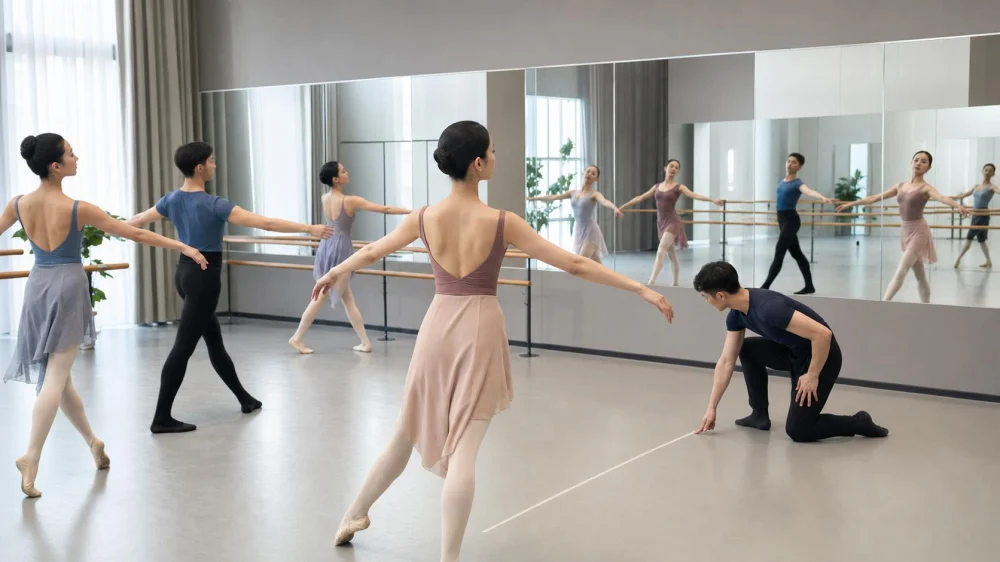
Quick answer: Treat the mirror as a visual tool, not a wall, support, or destination. Learn the stopping line, keep traveling combinations away from glass, scan the actual room as well as the reflection, and never lean equipment or bodies against mirror panels. Report chips, cracks, movement, loose trim, glare, or blind spots before class continues.
1. Look for Cracks, Chips, Gaps, or Loose Trim
Before movement, scan mirror edges and panels without touching them. Tell staff about a new line, chipped corner, rattling panel, failed seal, or object resting against glass. Do not investigate with your hand.

Ashburn Academy of Dance / ashburn academy of dance
21690 Red Rum Dr #172, Ashburn, VA 20147, USA
2. Learn the Physical Stopping Line
Use floor markings or instructor directions to identify how close dancers may travel. A reflected room can make space feel deeper than it is. Maintain a buffer large enough for arms, legs, momentum, and another dancer.
Expressions Dance Co / expression dance studio
AnnapolisAnne Arundel CountyMaryland
Arundel Plaza Shopping Center, 108 Old Solomons Island Rd, Annapolis, MD 21401, USA
3. Check the Real Room, Not Only the Image
Mirrors reverse left and right and can hide someone outside the reflected angle. Use peripheral awareness and quick real-space checks before moving sideways or backward. Do not assume a clear reflection means a clear path.
4. Decelerate Before the Mirror Zone
Mark the final steps of a traveling phrase and practice stopping under control. Groups should stagger starts and keep spacing. Never use the mirror or barre to catch uncontrolled momentum.
5. Spot With Awareness of Nearby Dancers
A mirror can help visual feedback but may encourage staring at one point. Follow the teacher's spotting method, keep the neck comfortable, and know where other groups enter. Stop when dizziness or disorientation makes the boundary unclear.
6. Do Not Trap Hands Between Barre and Glass
Use only the barre surface as taught. Avoid reaching behind it, pressing the mirror, or hanging body weight where the installation is not designed for it. Keep fingers clear when multiple dancers change positions.
7. Store Chairs, Props, and Speakers Elsewhere
Nothing should lean against mirror panels. Place portable barres, chairs, costumes, bags, and equipment in designated stable locations. When props move through the studio, use spotters and the instructor's route.
8. Tell the Instructor About Sunlight and Blind Spots
Strong reflections can temporarily obscure floor edges and other dancers. Staff may adjust curtains, lighting, formation, or facing. Do not improvise by taping, covering, or cleaning mirrors during active class.
9. Clear the Area if a Panel Is Damaged
Stop movement, warn others, and notify staff. Do not pick up glass, press tape onto a crack, or sweep near an unstable panel unless responsible personnel have secured the area. Follow evacuation or room-change instructions.
10. Build Body Awareness Beyond Visual Correction
Use the mirror for specific checks, then repeat with another facing or without watching yourself when the teacher directs. Sensation, alignment cues, music, spacing, and partner awareness matter too. Less visual dependence can improve adaptability on stages and in unfamiliar studios.

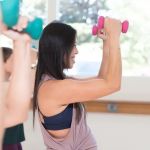 The Dailey Method Larkspur5.0 (12 reviews)
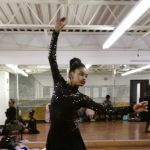 The POINTE! Company & Technique Conservatory4.0 (19 reviews)
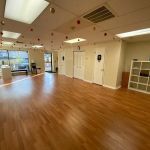 Ballroom Empire5.0 (27 reviews)
 Let's Ballroom!5.0 (3 reviews)
 Le Dance Academie5.0 (2 reviews)
 Fierce Allstars3.0 (6 reviews)
 What to Eat Before and After a Dance Class for Optimal Energy – Best Foods for Dancers
 How I Prepared for My First Live Stream Performance — A Personal Journey
 How I Learned to Use Immersive 360° Video in My Dance Class — My Story
 The Best Arm Toning Exercises for Dancers: Boost Strength and Flexibility
 My Experience With Teaching Inclusive Dance Workshops — What I Learned
 Why I Added Yoga to My Dance Routine (And How It Helped)