
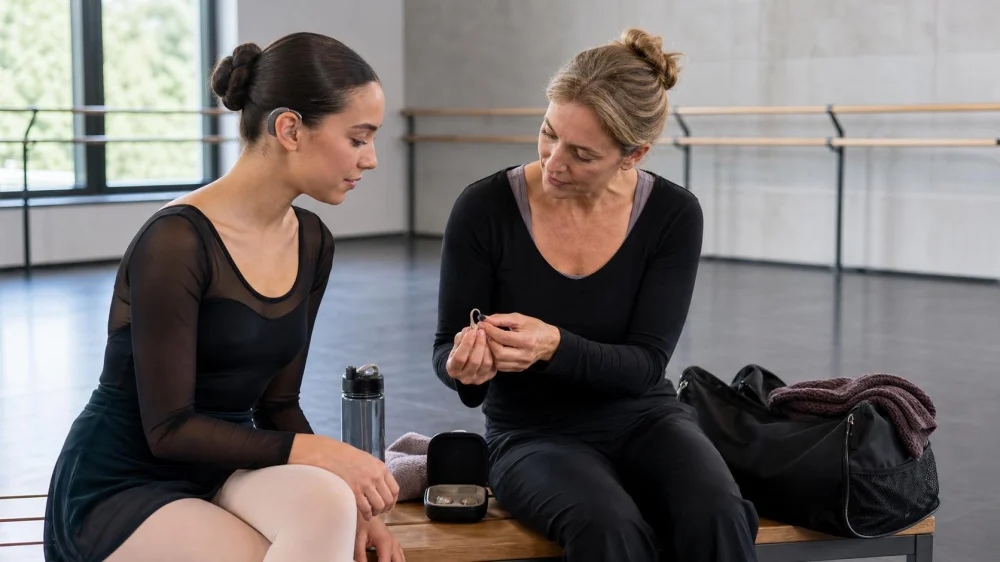
Dance Class With Hearing Aids: Plan Cues, Sweat, and Storage
On this page
Quick answer
Tell the studio and teacher how you prefer to receive cues before class. Check hearing-aid fit, battery, retention, sweat protection, and compatibility with costumes or headwear. Agree on visual start and stop signals and where to stand for speech access. Keep a labeled hard case and drying supplies nearby. Remove devices only when needed and after planning how you will hear alarms, music changes, and safety instructions.

Bella Ballerina / bella ballerina leesburg
LeesburgLoudoun CountyVirginia
1053 Edwards Ferry Rd NE, Leesburg, VA 20176, USA
Why it matters
Dance combines music, speech, movement, sweat, distance, and changing orientation. Hearing devices can improve access but may shift, whistle, become damp, or be blocked by hair and costume pieces.
This United States guide is general. Hearing loss, device type, implants, sweat resistance, retention accessories, classroom acoustics, and medical advice vary. Consult the hearing-care professional and device instructions.

Inwood Performing Arts Co / inwood performing arts
InwoodBerkeley CountyWest Virginia
2297 Henshaw Rd, Inwood, WV 25428, USA
Practical checklist
- Tell the teacher your preferred communication method and best listening position.
- Inspect device fit, battery, microphone ports, retention, and moisture protection.
- Agree on visual cues for start, stop, tempo, spacing, and emergencies.
- Test music and voice levels before the room becomes busy.
- Keep a labeled hard case, spare power, and approved drying supplies off the floor.
- Secure hair, hats, costumes, and masks so they do not dislodge devices.
- Stop for pain, feedback, sudden hearing change, dizziness, or device damage.
Step-by-step plan
- Visit the room early and identify speaker, teacher, mirror, exit, and sight-line positions.
- Explain whether you rely on lip reading, captions, gestures, assistive listening, or repeated verbal cues.
- Use only device-maker or clinician-approved retention and moisture products.
- Run a short movement test with head turns, jumps, floorwork, and costume elements before full choreography.
- If removing devices, place them immediately in the case and activate the agreed visual-cue plan.
- Ask the teacher to face the class and pause music for important corrections when practical.
- Dry, clean, and inspect devices after class according to instructions.
Keep device model, settings, accessories, studio cue plan, room position, sound issues, moisture events, battery changes, symptoms, and hearing-care advice.
Limits and warning signs
A sweat cover does not make every device waterproof, and a retention cord can snag if poorly placed. Removing devices may reduce awareness of alarms or nearby dancers, so access must be planned.
Seek urgent medical advice for sudden hearing loss, severe ear pain, drainage, new severe dizziness, head injury, or implant-site problems. Follow emergency guidance for damaged implanted equipment.
Frequently asked questions
Should I remove hearing aids for dance?
Not automatically. Base the decision on device guidance, activity, moisture, impact risk, and communication access.
How can the teacher help?
Use clear sight lines, visual cues, face-to-face instruction, and paused music for key directions.
Can I use any sweat cover?
Use only compatible products that do not block microphones or controls.
Where should I store devices?
In a labeled hard case in a dry fixed location, never loose on the floor or in a towel.
Sources and evidence
The guide applies hearing-access and device-care principles: plan communication, maintain visual safety cues, protect devices from moisture and displacement, preserve emergency awareness, and follow manufacturer and hearing-care instructions.
Conclusion and next steps
Arrive early, agree on visual cues and room position, and test device retention during gentle movement. Keep a labeled hard case nearby and stop for sudden hearing, balance, pain, or equipment changes.



 Studio 12 Dance Center5.0 (7 reviews)
 Jazzercise Moore Fitness Studio4.0 (8 reviews)
 Nebraska Dance Central4.0 (60 reviews)
 MOVE Dance Academy, LLC5.0 (10 reviews)
 Linda’s Ballet Workshop4.0 (23 reviews)
 Damascus Studio of Dance (Shannon Rush Dance)5.0 (2 reviews)
 The Difference Between Street Dance and Studio Dance Styles – A Complete Guide
 The title is clear, concise, and optimized for search engines while matching the article’s content.
 What is Forró? The Brazilian Partner Dance
 How to Find Scholarships or Financial Aid for Dance Training
 How I Used Dance to Improve My Posture at Work — My Practical Story
 How to Prepare for a Dance Class When You're a Complete Beginner