
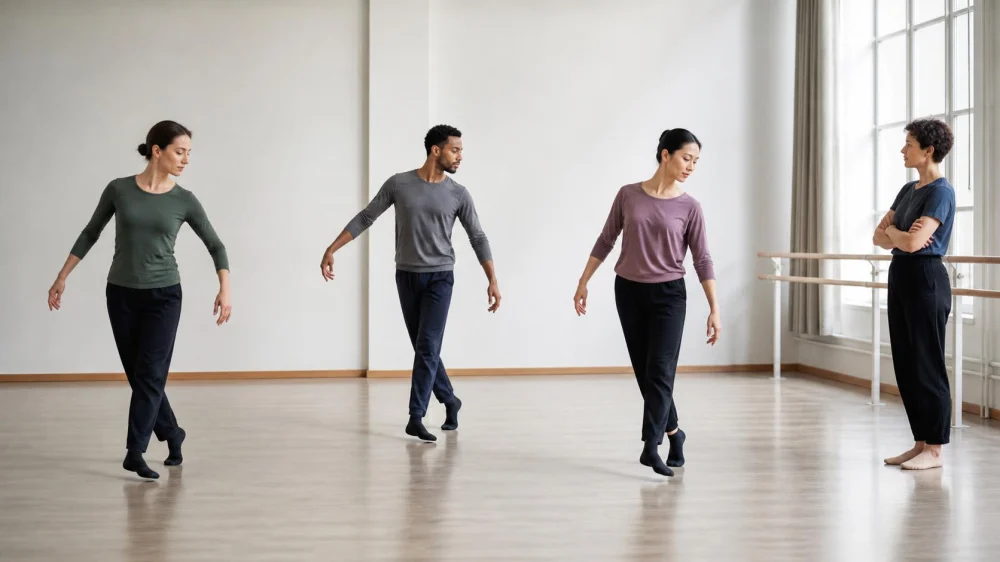
Dance Marking: Learn the Path Before Going Full-Out
On this page
Quick answer
Dance marking is a reduced-effort rehearsal that preserves the sequence, timing, direction, and key shapes while limiting range, speed, force, or elevation. Use it to learn pathways and transitions without pretending it fully tests balance, stamina, partnering, floor contact, or performance quality. Agree with the teacher on what must stay exact, then progress to fuller movement only when space and preparation are ready.
Born 2 Dance Studio - Vienna / born to dance vienna
262 Cedar Ln SE, Vienna, VA 22180, USA
What marking means in dance practice
Marking lets a dancer rehearse information with less physical output. The useful part is not simply making every movement small; it is choosing which elements remain accurate—counts, facings, pathways, weight shifts, arms, focus, cues, formations, or entrances—while temporarily reducing selected demands. Different teachers and styles may use the term differently.
This guide is for dancers in United States classes and rehearsals following instructor direction. It is not a medical return-to-dance plan or a substitute for technique training. Age, style, floor, footwear, injury status, partnering, lifts, acrobatics, pointe work, props, and performance deadlines can change whether marking is appropriate.

Dance King Entertainment / dance king studios leesburg
LeesburgLoudoun CountyVirginia
26 W Market St, Leesburg, VA 20176, USA
Decide what stays exact
- The rehearsal goal: sequence memory, counts, musical cue, direction, pathway, formation, arm pattern, transition, expression, or spacing.
- Which elements must remain exact and which may be reduced, such as travel, depth, turn count, speed, jump height, force, or floor work.
- Starting mark, ending mark, traffic pattern, nearby dancers, mirrors, barres, walls, props, bags, cameras, and clear exits.
- The music section, tempo, count structure, verbal cue, role, partner, entrance, exit, and reset point for each run.
- Footwear, floor traction, clothing, hair, jewellery, warm-up status, fatigue, pain, and any teacher or healthcare restriction.
- Which sections cannot be safely marked alone, including lifts, catches, weight sharing, acrobatics, high-impact landings, or unfamiliar floor skills.
- The progression point: when the teacher wants greater range, full timing, travel, elevation, partnering, or performance quality.
Mark choreography with purpose
- Ask the teacher what the run is meant to solve and repeat the elements that should remain accurate while effort is reduced.
- Walk the pathway without music, facing the correct directions and arriving at each formation or spatial landmark under control.
- Add counts and transitions, keeping weight placement and balance honest enough that the next movement begins from the intended place.
- Layer arms, head, focus, and musical cues without increasing travel or impact faster than the available space allows.
- Mark with the group and adjust spacing; a reduced step can distort formations if everyone shrinks the pathway differently.
- Increase one demand at a time—tempo, range, travel, turn, elevation, or expression—while the teacher watches for lost timing or control.
- Run fuller sections only after appropriate warm-up, floor and footwear checks, clear traffic, and explicit permission for partnering or impact.
After rehearsal, note the section, goal, counts, pathway landmarks, cue words, corrected transition, intensity used, and the next element to add. A simple floor sketch can preserve formations without filming others. Follow studio consent and file-control rules for any video reference.
What marking cannot replace
Marking does not prove that a dancer can safely perform full turns, jumps, lifts, floor work, speed, endurance, or partner timing. Excessively vague marking can teach the wrong weight shift or pathway. Do not use reduced effort to bypass warm-up, conceal pain, improvise a restricted skill, or join a moving formation without matching the group's agreed scale.
Stop and tell the teacher about sharp pain, dizziness, faintness, breathing difficulty, chest pain, new weakness, numbness, head impact, loss of control, unsafe floor conditions, or a collision. Use qualified medical or rehabilitation guidance for injury and return to dance; marking is not evidence that full-out performance is medically appropriate.
Frequently asked questions
Is marking just doing the choreography smaller?
Not exactly. It is a purposeful reduction that keeps selected information accurate while lowering chosen physical demands.
Should timing stay the same when marking?
Often yes, but the teacher may slow or pause a section. Confirm whether counts, tempo, or only pathway is the priority.
Can I mark jumps without leaving the floor?
Sometimes a teacher may use a no-jump version, but takeoff, landing, spacing, and stamina still need separate safe practice.
How do partners mark a lift?
Do not improvise. The teacher should define a no-load pathway, hand cue, or alternative; actual weight sharing requires appropriate technique and supervision.
When should I stop marking and dance full-out?
Progress when the teacher asks, the sequence and space are clear, and the body, floor, footwear, partners, and rehearsal plan are ready.
Sources and evidence
Use the teacher's current choreography and rehearsal goals, studio safety rules, flooring and footwear guidance, partner or prop protocols, and individualized healthcare advice when restrictions apply. General dance pedagogy supports progressive practice, but style and choreography determine what marking should preserve.
Conclusion and next steps
Choose one rehearsal goal, define what stays exact, and mark the path, counts, and transitions with honest weight shifts and safe spacing. Add one demand at a time under teacher direction. Do not treat a successful reduced-effort run as proof that impact, speed, partnering, stamina, or performance intensity is ready.

 Mae the Bellydancer0.0 (0 reviews)
 S & L Dance Studio Inc.0.0 (0 reviews)
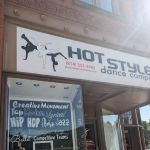 Hot Styles Dance Company5.0 (7 reviews)
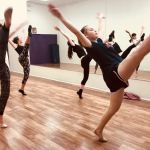 Step II Dance Center5.0 (14 reviews)
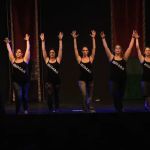 Dance from the Heart4.0 (5 reviews)
 NrityaShastra Bharatanatyam Academy4.0 (30 reviews)
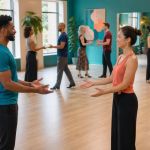 Dance Partner Rotation: Use Names, Boundaries, and Clear Reset Cues
 How I Use Visualization Techniques Before Every Performance
 Telepathic Dance Collaboration Story: My Journey Into Creative Movement Communication
 What is Line Dancing and Where to Find Country Bars with Lessons
 My Experience of Teaching Dance in Schools — What I Learned About Kids
 Why I Switched from Tap to Contemporary Dance – My Personal Journey and Lessons Learned