
Dance Rehearsal Reset: A 10-Minute After-Class Routine
On this page
- Quick answer
- Minute one: leave the floor safely
- Minutes two and three: downshift
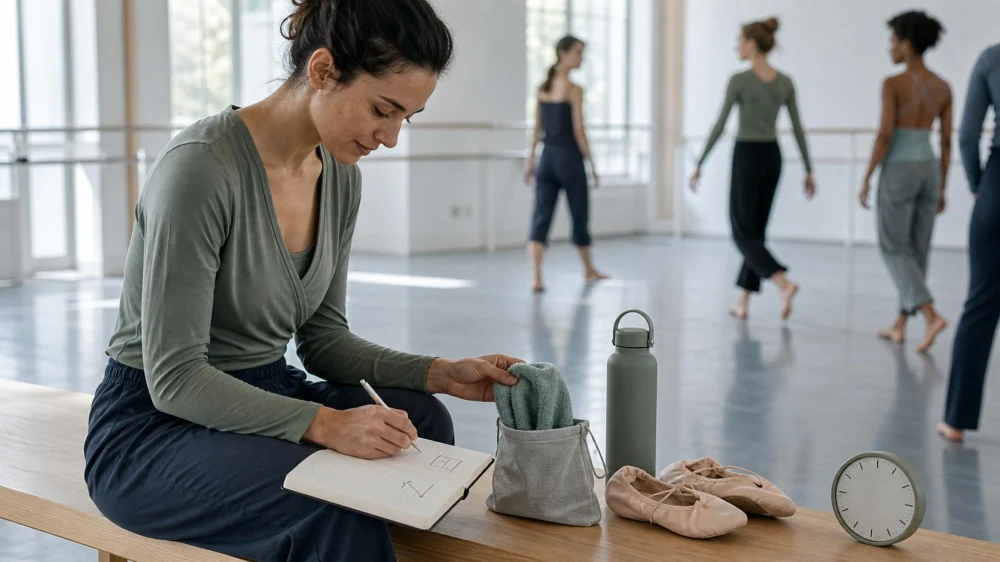
- Minutes four and five: capture corrections
- Minutes six and seven: handle gear
- Minute eight: check symptoms
- Minute nine: set the next action
- Minute ten: confirm logistics
- Plan water and food without rigid rules
- Continue the reset at home
- Health and training limits
- Ten-minute checklist
- Frequently asked questions
- Evidence and sources
- Next steps
Quick answer
Use the first 10 minutes after dance rehearsal to lower intensity gradually, record only the corrections you need next, separate damp gear, check unusual symptoms, and confirm the next call time. The routine should help you recover and remember, not extend rehearsal with unsupervised full-out repetitions.
Follow the teacher’s cool-down and facility rules first. Individual hydration, food, injury, and recovery needs vary. Persistent or concerning symptoms require qualified healthcare advice, not a generic checklist.

Inwood Performing Arts Co / inwood performing arts
InwoodBerkeley CountyWest Virginia
2297 Henshaw Rd, Inwood, WV 25428, USA
Minute one: leave the floor safely
Finish the assigned phrase, acknowledge the stop, and clear the active floor before reaching for a phone or bag. Pick up only your own approved props, bottle, clothing, and tape. Tell staff about liquid, broken material, or an unsafe surface rather than quietly walking away.
Return shared equipment to the designated area. Keep exits, mirrors, barres, and traffic lanes clear. Do not begin a private full-out run while another group is entering.
If the teacher gives final notes, listen before packing. Write one keyword only if devices or notebooks are allowed and you are outside the movement zone.
Class Act Performing Arts / class act studios
EdgewaterAnne Arundel CountyMaryland
161 Mitchells Chance Rd, Edgewater, MD 21037, USA
Minutes two and three: downshift
Follow the instructor’s planned cool-down. This may include easy walking, gentle movement through comfortable ranges, breathing, or a gradual reduction in tempo. A cool-down should not become a competition for the deepest stretch.
Keep breathing and circulation moving after a demanding run rather than collapsing immediately on the floor. If you feel dizzy, faint, unusually short of breath, confused, or have chest pain, stop and alert someone. Seek urgent medical help when appropriate.
Do not add aggressive stretching to “fix” tightness that appeared with pain. Note the location and activity, then seek assessment if it persists or affects movement.
Minutes four and five: capture corrections
Write three lines:
- Confirmed correction: the teacher’s cue in accurate, neutral language.
- Location: count, section, formation, or transition.
- Next action: what you will ask or practice under the next suitable conditions.
Separate the teacher’s words from your interpretation. IADMS dance-education resources describe feedback as information that guides skill acquisition and movement quality. Turning feedback into a process action is more useful than labeling yourself talented or bad.
Do not write every note given to the room. Choose what applies to you, and ask if uncertain. Version-date choreography notes so an old formation does not return after a change.
A useful entry might read: “Correction: finish the head focus before the diagonal travel. Location: second phrase after the music break. Next action: confirm whether the change starts on the breath or the first count.” This captures a process without turning the note into self-judgment. If the correction involved another dancer, describe your own cue and pathway rather than their mistake.
Minutes six and seven: handle gear
Change out of wet layers when privacy and facilities allow. Place damp clothing and towels in a separate washable pouch for transport, then unpack them at home. Open the dance bag to ventilate.
Check shoe fastenings, ribbons, elastic, soles, and heel tips without performing a repair in a busy walkway. Let shoes dry according to manufacturer instructions and keep street shoes off studio surfaces.
Remove pins, tape scraps, food wrappers, and loose costume pieces from your area. Store sharp objects in a closed container. Do not borrow personal foot-care tools, towels, or bottles.
Minute eight: check symptoms
Scan from head to feet. Record new pain, swelling, numbness, dizziness, headache, unusual fatigue, breathing difficulty, or a feeling of instability. Note when it began and which movement was involved.
Do not interpret absence of pain at minute eight as proof that every load was safe. Symptoms can develop later. Conversely, a note does not diagnose an injury.
Tell the teacher promptly about an incident, head impact, fall, or symptom that affected rehearsal. Sudden severe pain, suspected concussion, inability to bear weight, chest pain, fainting, major swelling, deformity, or neurological symptoms need appropriate medical evaluation.
Minute nine: set the next action
Choose one small task for the next session. Examples include asking where a pathway changes, reviewing eight counts at walking speed, bringing the approved shoe repair, or arriving early for spacing.
Do not prescribe extra conditioning or dozens of repetitions because one run felt difficult. Dance fitness, technique, rehearsal, and performance can impose different demands. IADMS resources emphasize preparing progressively for the actual task rather than assuming class alone matches performance intensity.
If the action involves pain, injury, return to dance, nutrition, or a major load change, involve the appropriate teacher and healthcare professional.
Make the action small enough to verify. “Review the new entrance counts once before call” is clearer than “work harder.” “Ask where the formation centers after the crossing” is safer than repeatedly running the collision point alone. A completed small action also prevents the reset list from growing into an unofficial second rehearsal.
Minute ten: confirm logistics
Check the official schedule for the next call time, room, footwear, costume, music version, and required materials. Do not rely only on a hallway conversation. If the schedule changed, save the authoritative message.
Confirm transportation, especially after an evening rehearsal. Know the building’s closing procedure and do not leave a minor or vulnerable participant waiting alone.
Send only necessary questions through the approved communication channel. Respect quiet hours and youth-safety communication policies.
Plan water and food without rigid rules
Drink according to thirst, the session demands, environmental conditions, and any individualized plan. Refill the bottle where permitted and clean it at home. Do not share mouthpieces.
Food needs vary by rehearsal length, timing, dietary pattern, health, and access. A practical post-rehearsal option may combine carbohydrate, protein, and fluid, but there is no single mandatory snack for every dancer. Avoid moral labels such as “good” and “bad” food.
Dancers with allergies, diabetes, gastrointestinal conditions, eating-disorder concerns, REDs risk, or other medical needs should work with qualified clinicians or registered dietitians familiar with dance.
Continue the reset at home
Remove damp items from the bag, clean the bottle, air shoes, and charge approved devices. Prepare the next day’s clean clothing and refill personal care supplies.
Review the three-line correction note once, then stop. Mental rehearsal can be useful, but late-night repeated video review can displace sleep. Protect a consistent sleep opportunity.
If soreness or symptoms change, update the note and follow the school’s reporting process. Do not conceal an injury to keep a role.
Prepare the environment as well as the bag. Put the call sheet, clean clothing, shoes, and transport details in one place. If the next day includes a costume, prop, or different venue, use the production’s official list rather than memory. This reduces last-minute rushing without adding physical load.
A weekly reset can be longer than the daily version. Review recurring corrections, retire outdated choreography notes, inspect consumable supplies, and identify schedule conflicts early. Keep health information private and share it only with people who need it for safe participation.
Health and training limits
This routine is general organization, not a medical recovery prescription. The right cool-down, hydration, nutrition, sleep, and return-to-dance plan depends on the person and workload.
Teachers and dancers should avoid using the checklist to normalize exhaustion, pain, food restriction, or unsafe scheduling. Seek qualified medical, mental-health, or nutrition support when warning signs persist.
Ten-minute checklist
- Clear the floor and return shared gear.
- Follow the assigned gradual cool-down.
- Write one correction, location, and next action.
- Separate damp clothing and inspect shoes.
- Record unusual symptoms and report incidents.
- Choose one realistic next-session task.
- Confirm schedule, room, equipment, and ride.
- Unpack, clean, dry, and prepare at home.
Frequently asked questions
Should I stretch for 10 minutes after every rehearsal?
Follow the teacher’s plan and your individual guidance. Longer or deeper stretching is not automatically better, especially when pain is present.
Can I repeat a difficult section after dismissal?
Only with permission, adequate space, suitable supervision, and an appropriate level of effort. The studio may need the floor for another group.
What if I cannot remember all the corrections?
Record the one or two that change the next rehearsal. Ask the teacher to confirm priorities rather than reconstructing everything from memory.
Is soreness normal?
Some post-exercise soreness can occur, but a checklist cannot determine its cause. Seek care for severe, focal, worsening, or function-limiting symptoms.
Evidence and sources
- IADMS: Process correction and praise
- IADMS: Constructive feedback in dance
- IADMS: Dance Fitness resource paper
Next steps
Save the eight-item checklist in your dance bag. After the next rehearsal, time the routine once and notice which steps prevent forgotten notes, damp gear, or schedule confusion.
Keep the routine short. Its job is to close rehearsal safely and prepare the next session, not to create another workout.

 Balleraena Dance Studio4.0 (17 reviews)
 The Rhythm Room Ballroom Dance Studio5.0 (34 reviews)
 Club Sway0.0 (0 reviews)
 Triple Threat School of Dance, Music, & Acting5.0 (7 reviews)
 Chrome House Studio5.0 (98 reviews)
 Ishida Dance Company5.0 (1 reviews)
 The Etiquette of Dance Classes: Unwritten Rules You Should Know
 What is a Dance Marathon? Fundraising and Endurance Events
 What is Whacking? Arm-Based Disco Dance Movement
 How I Use Visualization Techniques Before Every Performance
 What is Dance Photography and How to Get Good Pictures
 The Day I Made the “Flyers” Team — What It Takes in Stunt Dance