
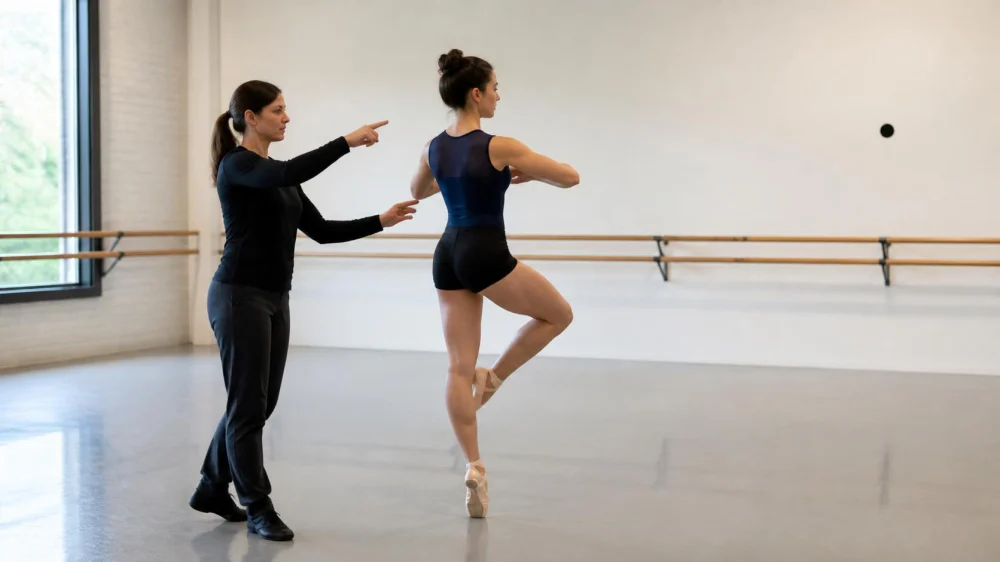
Dance Turn Spotting: Fix the Gaze Before Adding Speed
On this page
Quick answer
Practice spotting with a teacher before adding multiple or fast turns. Choose one clear target at eye level, organize posture and supporting-leg balance, rotate the body while the head remains briefly focused, then turn the head quickly to find the same target again. Begin with slow quarter and single turns on a clear suitable floor. Stop for dizziness, pain, loss of vision, headache, nausea, or repeated loss of control.

The Little Gym of Pearland / the little gym pearland
9607 Broadway St, Pearland, TX 77584, USA
Why it matters
Spotting helps a dancer organize visual focus and timing during turns, but it does not replace balance, alignment, floor traction, strength, vestibular health, or progressive technique.
This United States guide is general dance education. Style, age, footwear, floor, injury history, vision, migraine, vestibular conditions, medications, and teacher methods differ. Follow qualified instruction and medical advice.

Artistic Movement Academy of Dance / artistic movement academy of dance
Glen BurnieAnne Arundel CountyMaryland
890 Airport Park Rd Suite 120, Glen Burnie, MD 21061, USA
Practical checklist
- Clear the turn lane and confirm a sprung or suitable dance surface.
- Choose a stable high-contrast target at eye level.
- Warm up ankles, knees, hips, trunk, neck, and basic balance.
- Set arms, supporting foot, turnout or parallel alignment as assigned.
- Start with quarter turns and one controlled direction.
- Rest until visual focus and breathing fully settle.
- Train both directions only within the teacher's progression.
Step-by-step plan
- Stand tall and focus on one stationary point without moving the feet.
- Practice slow body rotation while delaying the head only within comfortable neck range.
- Turn the head smoothly and quickly to reacquire the same point without whipping into pain.
- Add a controlled single turn with a clear preparation and landing.
- Check whether the gaze returns before adding speed, rotations, travel, relevé, or jumps.
- Film only with consent and use one teacher cue at a time.
- End when technique degrades rather than repeating through dizziness.
Track floor, shoes, target, direction, turn type, repetitions, teacher cues, dizziness, headache, pain, vision changes, and recovery time.
Limits and warning signs
Spotting may reduce disorientation for some dancers but does not guarantee absence of dizziness. Forcing the neck, staring at a mirror reflection, or drilling many turns while symptomatic can worsen control.
Stop and seek medical advice for persistent or severe dizziness, fainting, new headache, vision or hearing change, vomiting, weakness, numbness, or symptoms after head impact. Use emergency help for stroke signs or loss of consciousness.
Frequently asked questions
Should I spot myself in the mirror?
A fixed wall target is often clearer; follow the teacher's method and avoid depending on a moving reflection.
How fast should the head move?
Fast enough to reacquire the target within a controlled turn, never forced through neck pain.
Why am I still dizzy?
Turn volume, breathing, vision, vestibular factors, illness, medication, and technique may contribute. Stop and seek advice if it persists.
When can I add multiple turns?
After consistent preparation, axis, spot, landing, and teacher approval in single turns.
Sources and evidence
The guide reflects common dance pedagogy and safety: establish a fixed visual target, progress from slow single turns, coordinate the whole turn rather than whipping the neck, use appropriate floors, and stop for neurologic or vestibular symptoms.
Conclusion and next steps
Ask the teacher to confirm one target and one alignment cue. Practice a few slow single turns with full recovery, and add speed only when the spot, axis, and landing remain repeatable.

 Studio 12 Dance Center5.0 (7 reviews)
 Jazzercise Moore Fitness Studio4.0 (8 reviews)
 Nebraska Dance Central4.0 (60 reviews)
 MOVE Dance Academy, LLC5.0 (10 reviews)
 Linda’s Ballet Workshop4.0 (23 reviews)
 Damascus Studio of Dance (Shannon Rush Dance)5.0 (2 reviews)
 The Difference Between Street Dance and Studio Dance Styles – A Complete Guide
 The title is clear, concise, and optimized for search engines while matching the article’s content.
 What is Forró? The Brazilian Partner Dance
 How to Find Scholarships or Financial Aid for Dance Training
 How I Used Dance to Improve My Posture at Work — My Practical Story
 How to Prepare for a Dance Class When You're a Complete Beginner