
- Understanding the Core Tension in Choreography - technique vs emotional expression
- How Technical Training Shapes My Movement Vocabulary - discipline and foundation building
- Where Creativity Actually Begins in My Process - improvisation and instinct work
- Structuring a Choreography Session Step by Step - balancing structure with freedom
- Real Studio Story from a Rehearsal Breakthrough - unexpected creative discovery
- Common Mistakes Dancers Make When Over-Focusing on Technique - rigidity and loss of flow
- When Creativity Overpowers Technique - maintaining control and clarity
- Music Selection and Emotional Mapping - how sound influences movement decisions
- How I Refine and Edit My Choreography - revision as an artistic tool
- How Creative Edge Dance Studio Supports Artistic Growth - training environment and guidance
Understanding the Core Tension in Choreography
When I think about How I Balance Technique vs Creativity in My Choreography — My Process, the first thing that always comes to mind is tension. Not conflict, but tension in the best artistic sense. Technique gives structure, precision, and control. Creativity gives emotion, unpredictability, and identity.
Every choreographer I know in the U.S. dance scene wrestles with this balance. If you lean too heavily into technique, movement can feel mechanical. If you lean too much into creativity, the structure can collapse. My goal has always been to keep both alive in the same body at the same time.
Over time, I realized that this balance is not something you “solve.” It is something you actively manage in every rehearsal, every phrase, and every transition.
How Technical Training Shapes My Movement Vocabulary
A big part of How I Balance Technique vs Creativity in My Choreography — My Process comes from years of technical training. Ballet, contemporary fundamentals, and commercial dance drills all built the foundation of how I understand movement.
Technique is not just execution—it is language. Without it, creativity has no grammar. I often compare it to writing: you can have brilliant ideas, but without syntax, they don’t communicate clearly.
In my early training days, I spent hours repeating simple sequences. At the time, it felt repetitive, but now I see how it built my ability to move cleanly between styles without losing control.
Even today, when I start a new piece, I rely on those technical instincts to make sure my movement is grounded before I begin experimenting.
Artistic Movement Academy of Dance / artistic movement academy of dance
Glen BurnieAnne Arundel CountyMaryland
890 Airport Park Rd Suite 120, Glen Burnie, MD 21061, USA
Where Creativity Actually Begins in My Process
People often assume creativity comes first, but in my experience with How I Balance Technique vs Creativity in My Choreography — My Process, creativity usually appears after structure is established.
I typically begin with improvisation, but not random movement. I set constraints—such as rhythm changes, emotional states, or spatial limitations. These boundaries actually unlock more creativity, not less.
One of my favorite exercises is dancing to a track I’ve never heard before and refusing to repeat any movement. This forces my body to respond instinctively instead of relying on familiar patterns.
This is where choreography starts to feel alive rather than planned.
Structuring a Choreography Session Step by Step
A key part of How I Balance Technique vs Creativity in My Choreography — My Process is having a flexible structure. I never approach rehearsals completely freeform or overly rigid.
I usually divide my sessions into three phases: technical activation, creative exploration, and refinement. Each phase serves a different purpose in shaping the final piece.
During technical activation, I focus on alignment, control, and musical precision. This helps warm up both body and mind.
Creative exploration is where I allow movement to break patterns. I stop judging ideas and simply observe what emerges.
Finally, refinement is where I bring everything back into clarity—cleaning transitions, adjusting timing, and ensuring the choreography communicates clearly.
Real Studio Story from a Rehearsal Breakthrough
One of the clearest moments that shaped How I Balance Technique vs Creativity in My Choreography — My Process happened during a rehearsal at Creative Edge Dance Studio.
I was working on a contemporary piece that felt too structured. Every movement looked correct, but something was missing emotionally. During a break, one dancer accidentally repeated a movement off-count, and instead of correcting it immediately, I let it continue.
That “mistake” became the emotional center of the entire piece. It broke the mechanical rhythm and introduced vulnerability that I couldn’t have planned technically.
That moment reminded me that choreography is not just about control—it’s about allowing space for unexpected truth.
Common Mistakes Dancers Make When Over-Focusing on Technique
In discussing How I Balance Technique vs Creativity in My Choreography — My Process, I often notice dancers fall into the trap of perfectionism.
When technique becomes the only focus, movement starts to lose emotional weight. Dancers begin to prioritize cleanliness over expression, which can flatten the performance.
I’ve seen technically strong dancers struggle to connect with audiences because their movement feels emotionally distant. This is not a lack of skill—it is a lack of balance.
The goal is not to abandon technique, but to let it serve expression rather than replace it.
When Creativity Overpowers Technique
On the other side of How I Balance Technique vs Creativity in My Choreography — My Process, creativity without structure can also create problems.
When dancers rely only on instinct, movement can become unclear or physically unsafe. Transitions may lose alignment, and the choreography may feel disconnected from the music.
I’ve had pieces where I loved the emotional idea but had to go back and rebuild the technical foundation so it could actually be performed consistently.
Creativity needs structure to survive in live performance settings.
Music Selection and Emotional Mapping
Music plays a central role in How I Balance Technique vs Creativity in My Choreography — My Process. I don’t just choose songs I like—I choose emotional landscapes.
Before I even move, I map the emotional shifts within the track. Where does tension rise? Where does it release? Where is silence meaningful?
This mapping helps me decide when to prioritize technical precision and when to allow creative freedom.
For example, sharp rhythmic sections usually demand stronger technique, while ambient sections allow for more improvisational movement.
How I Refine and Edit My Choreography
Editing is one of the most overlooked parts of How I Balance Technique vs Creativity in My Choreography — My Process. Many people assume choreography is created in a straight line, but in reality, it is constantly revised.
I often remove movements that I initially loved because they don’t serve the full piece. This can be difficult emotionally, but it is necessary for clarity.
I also rework transitions more than individual moves. Transitions are where technique and creativity either clash or merge successfully.
The final version of a piece is usually much simpler than the first draft, but significantly more intentional.
How Creative Edge Dance Studio Supports Artistic Growth
A major influence in refining How I Balance Technique vs Creativity in My Choreography — My Process has been training and working within Creative Edge Dance Studio.
The environment encourages dancers to explore both technical mastery and personal expression without forcing one to dominate the other. This balance is rare in structured training spaces.
In rehearsals, feedback is not only about correctness but also about emotional clarity and artistic intention. This helps dancers develop a more complete understanding of choreography as both a skill and an art form.
For dancers looking to grow, spaces like Creative Edge Dance Studio provide not just training but a mindset shift—one that values both discipline and creativity equally.
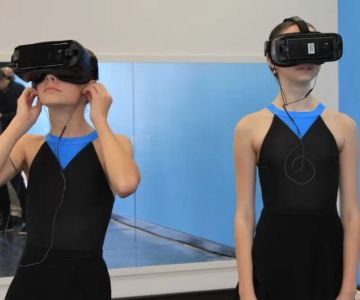
 The Little Gym on Capitol Hill4.0 (22 reviews)
 The Little Gym of Charlotte4.0 (151 reviews)
 Babylon School of Dance4.0 (35 reviews)
 Ramsmi Dance Academy5.0 (4 reviews)
 Just For Kix5.0 (1 reviews)
 Metropolitan Ballet Academy & Company4.0 (30 reviews)
 How I Learned to Use Social Media to Promote My Dance Workshops
 What is Twerking? Cultural Roots and How to Learn Safely
 The Connection Between Dance and Creativity in Business
 How to Document Your Dance Journey Through Video or Journaling
 How to Plan a Dance-Themed Birthday Party or Event: A Complete Guide
 How to Develop Faster Footwork for Any Dance Style