
- 1-My Journey into Holographic Dance Teaching
- 2-Understanding Holographic Technology for Dance
- 3-First Experiences Teaching with Holograms
- 4-Challenges I Faced and Overcame
- 5-Success Stories and Student Experiences
- 6-Advice for Dance Instructors
1. My Journey into Holographic Dance Teaching
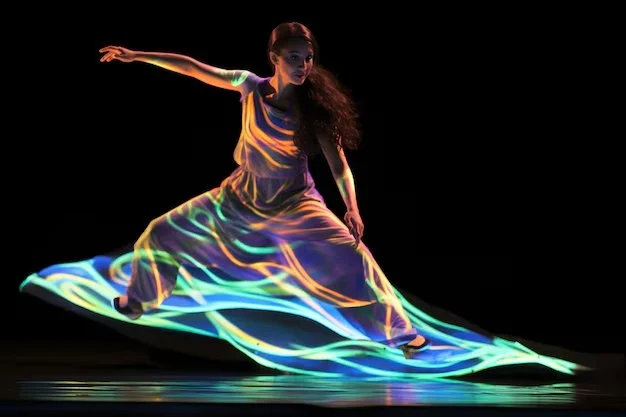
My journey began when I was seeking innovative ways to make dance instruction more engaging and accessible. Traditional in-person classes are wonderful, but I wanted to reach students beyond geographic boundaries. That’s when I discovered the potential of holographic technology. Holograms allowed me to project three-dimensional representations of dance movements, giving students a unique, immersive learning experience.
At Creative Edge Dance Studio, we started experimenting with holographic lessons to supplement our regular curriculum. Initially, I was skeptical about whether students could truly learn from a digital projection, but early results were promising, sparking my curiosity to explore the full potential of this technology.
2. Understanding Holographic Technology for Dance
Holographic dance teaching combines motion capture, 3D modeling, and projection techniques. By recording precise movements, I could create a holographic model that students could view from multiple angles. This allows learners to see subtle nuances in posture, footwork, and rhythm that might be missed in 2D video lessons.
In one example, we captured a complex contemporary dance sequence using motion capture sensors and then projected it in 3D. Students were able to rotate and view the movements from different perspectives, which significantly improved their understanding of spatial dynamics and timing. Understanding the underlying technology helped me optimize the holographic experience for educational purposes.
Artistic Movement Academy of Dance / artistic movement academy of dance
Glen BurnieAnne Arundel CountyMaryland
890 Airport Park Rd Suite 120, Glen Burnie, MD 21061, USA
3. First Experiences Teaching with Holograms
My first class using holograms was both thrilling and nerve-wracking. I projected a hip-hop routine for intermediate students and guided them step by step, pausing the hologram when necessary to correct posture. The immediate feedback from students was encouraging; many felt they could grasp intricate moves faster than with conventional video tutorials.
One particularly memorable moment involved a student who struggled with timing in a jazz sequence. By interacting with the holographic projection repeatedly, she improved noticeably within a week. This experience reinforced the effectiveness of holograms in creating a dynamic, visual, and interactive learning environment.
4. Challenges I Faced and Overcame
Teaching with holograms wasn’t without challenges. Technical issues such as lighting, projector calibration, and software glitches sometimes disrupted lessons. Additionally, some students were initially hesitant to embrace digital learning tools.
To overcome these hurdles, I focused on preparation and support: setting up the classroom properly, providing clear instructions, and encouraging students to interact with the holograms gradually. A story that stands out involves a student who initially found the hologram distracting but, after one-on-one guidance, used it to master advanced choreography that had previously felt impossible. These moments reinforced the importance of patience and adaptability.
5. Success Stories and Student Experiences
The most rewarding part of teaching with holograms is seeing the transformation in students. Several have reported increased confidence and faster skill acquisition. For example, a small group of students prepared for a recital using holographic rehearsals alongside in-person practice. Their performance was smoother, with more precise synchronization than ever before.
Sharing these experiences at Creative Edge Dance Studio also inspired other instructors to integrate technology into their teaching methods. Observing students’ enthusiasm and engagement confirmed that holographic tools can enhance learning without replacing the human connection that is essential in dance education.
6. Advice for Dance Instructors
For instructors interested in exploring holographic dance teaching, start small. Select short sequences and gradually integrate holograms into your lessons. Pay attention to technical setup, and always combine holographic instruction with real-time feedback.
Additionally, consider resources from Creative Edge Dance Studio for equipment recommendations, software tutorials, and professional guidance. Combining traditional teaching methods with holographic technology can create a hybrid approach that maximizes student learning and engagement.


 Dan's Movement5.0 (2 reviews)
 Blier Enterprises Inc.-Consciously Connected Living &Vital Movement Rituals4.0 (39 reviews)
 Xuejuan Dance Ensemble5.0 (24 reviews)
 Sun Country Sports Center - West4.0 (104 reviews)
 Saka Kizomba0.0 (0 reviews)
 Kathak Rhythms4.0 (26 reviews)
 How to Give Back to the Dance Community as a Student
 The Connection Between Dance and Cultural Identity | Embracing Heritage
 My Experience With Dance & Peer Support Groups — My Story
 How to Develop Faster Footwork for Any Dance Style
 My Story of Starting a Student-Run Dance Club at College — What I Did
 What is Salsa Rueda de Casino? The Cuban Group Dance