
- discovering-vr-audio-choreography - how immersive sound changed my understanding of movement design
- first-experiment-with-spatial-audio - early failures, breakthroughs, and unexpected learning moments
- connecting-movement-and-sound - how choreography responds differently inside VR environments
- creative-process-rebuild - rethinking dance structure using immersive audio mapping
- future-of-dance-technology - how VR tools are reshaping modern choreography practice
The Moment Everything Changed in My Choreography Practice
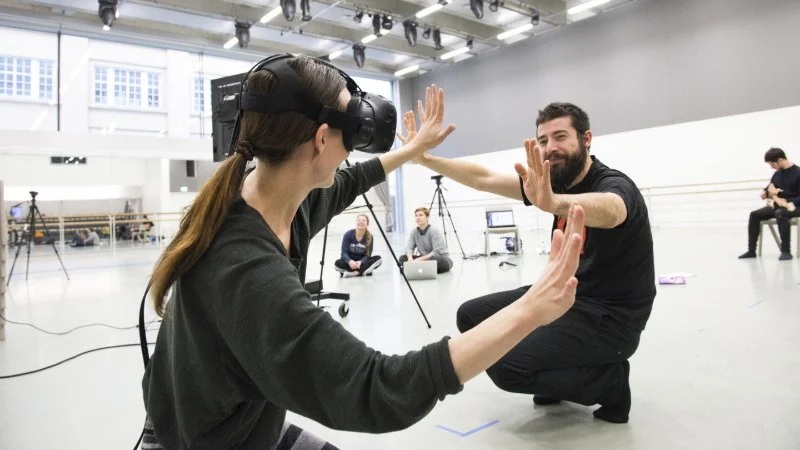
I still remember the first time I stepped into a VR studio environment with spatial audio enabled. I wasn’t expecting much—just another tech experiment that might or might not influence my choreography work. But within minutes, something clicked in a way I had never experienced in a traditional rehearsal space.

Inwood Performing Arts Co / inwood performing arts
InwoodBerkeley CountyWest Virginia
2297 Henshaw Rd, Inwood, WV 25428, USA
Sound stopped being background—it became space itself
In traditional choreography, music is something you move to. It sits outside the body, guiding rhythm and emotion. But in immersive VR audio choreography, sound behaves differently. It surrounds you, shifts as you turn, and changes depending on your position in virtual space. Suddenly, sound was no longer a guide—it became architecture.
Why this felt completely different from studio rehearsals
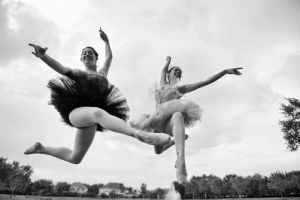
In a regular dance studio, I could predict everything: the acoustics, the speaker placement, even how dancers would respond to rhythm. But VR audio broke that predictability. A simple beat could feel like it was coming from behind, above, or moving through the body itself. That disrupted my usual way of structuring movement.
My First Attempt at VR Choreography — and Why It Failed
The first project I attempted using VR audio choreography didn’t go smoothly. I tried to adapt an existing contemporary piece into a virtual environment, thinking it would simply “translate.” It didn’t.
Movement lost its intention inside spatial sound
What I quickly learned was that choreography designed for physical space does not automatically work in virtual space. Dancers were reacting differently to sound cues that no longer came from fixed directions. A jump meant for a downbeat suddenly felt delayed or misplaced because the audio source shifted dynamically.
The unexpected emotional disconnect
Even more surprising was the emotional shift. Dancers reported feeling “disoriented but curious.” The lack of stable sound reference points created emotional ambiguity. At first, I thought this was a flaw. Later, I realized it was the beginning of something much deeper.
Learning to Think in Spatial Audio Instead of Music
The real breakthrough came when I stopped treating sound as music and started treating it as space. This shift changed everything about how I approached choreography.
Mapping sound like physical architecture
Instead of counting beats, I began mapping audio paths. A sound wasn’t just a cue—it was a trajectory. A rising tone might move from floor level to overhead, and dancers would physically follow that arc. This created a new kind of choreography where movement was shaped by invisible sound geometry.
How VR audio changed timing perception
One of the most interesting discoveries was that timing in VR is not absolute. Two dancers can experience the same sound slightly differently depending on orientation. This forced me to design choreography that was less rigid and more adaptive, allowing micro-variations in synchronization.
Building My First Fully Immersive VR Performance
After several experiments, I created my first fully immersive piece using immersive VR audio choreography techniques. It was not perfect, but it was the first time I felt like I wasn’t just adapting dance to technology—I was building dance with technology.
Designing movement through sound layers
I broke the audio into layers: environmental sound, emotional cues, and directional triggers. Each layer influenced movement differently. Environmental sound created atmosphere, emotional cues shaped intensity, and directional triggers dictated physical positioning.
Audience feedback and unexpected reactions
When I shared the piece with a small audience, the responses were surprising. Some described feeling like they were “inside the choreography” rather than watching it. Others mentioned that they noticed movement details they would normally miss in a stage performance.
Real Studio Moment: When a Dancer Changed the Entire Concept
During one rehearsal at Creative Edge Dance Studio, a dancer made an accidental discovery that completely changed my approach. She turned her head in VR and followed a sound that wasn’t assigned to her movement. Instead of correcting her, I observed what happened.
Emergent choreography behavior
Her movement naturally aligned with a different audio layer, creating a more emotionally coherent sequence than what I originally planned. That moment taught me that immersive VR audio choreography is not fully controlled—it evolves in real time with performer interaction.
Letting go of total control in choreography
That experience forced me to rethink authorship in dance. Instead of dictating every movement, I started designing systems that allow dancers to interpret spatial sound dynamically. This opened up creative possibilities I never expected.
Why Spatial Audio Is Reshaping Dance Creation
The more I worked with VR audio, the clearer it became that this is not just a tool—it is a new creative language. It changes how choreographers think about space, timing, and emotional structure.
Movement becomes multi-directional storytelling
In traditional choreography, storytelling is linear. In VR environments, it becomes spatial and multi-directional. A single moment can be experienced differently depending on where the dancer or viewer is positioned.
The role of Creative Edge Dance Studio in my exploration
Much of my experimentation would not have been possible without access to Creative Edge Dance Studio, where I was able to combine physical rehearsal with digital sound mapping tools. That hybrid environment made it possible to test ideas quickly and refine them in real time.
What I Learned About Emotion in Virtual Dance Spaces
One of the most surprising outcomes of working with immersive VR audio choreography is how deeply it affects emotional expression. Movement alone does not carry emotion in VR—the sound environment amplifies or reshapes it.
How sound direction influences emotional intensity
A whisper-like sound moving behind a dancer creates tension. The same sound in front feels inviting. These subtle differences completely change how movement is perceived and performed.
Why VR dance feels more personal to audiences
Because each viewer can experience slightly different spatial audio perspectives, the performance becomes individualized. No two audience members receive the exact same emotional interpretation.
Where This Technology Is Heading Next
I no longer see immersive VR audio as experimental—it is becoming a core part of how future choreography will be designed. As tools become more accessible, choreographers will likely integrate spatial sound as naturally as they currently use music.
Blending physical and digital choreography worlds
The future likely lies in hybrid performances where dancers move in physical space while audiences experience layered virtual sound environments. This fusion creates a richer, more flexible form of storytelling.
Why I continue exploring this direction
Every new experiment reveals something unexpected. The more I work with VR audio, the more I realize that choreography is no longer just about movement—it is about designing experience across multiple sensory dimensions.

 Allison's Dance Academy - Rock Valley4.0 (10 reviews)
 Priyanka's Nritya Academy LLC5.0 (134 reviews)
 North Texas Dance Arts4.0 (41 reviews)
 Social Graces Ballroom Dance Studios5.0 (63 reviews)
 The Martelly School of Ballet and Modern Dance ---- Marshall Ballet Theatre5.0 (3 reviews)
 Time2Dance0.0 (0 reviews)
 How to Find a Dance Class with a Diverse Group of Students | Tips for an Inclusive Experience
 How I Found My Unique Dance Style After Trying Every Genre
 My Experience With Dance in a Senior Living Community: A Journey of Fulfillment
 How I Learned to Teach Intergenerational Dance Exchanges — My Story
 How I Balanced Dance & Injury Recovery — My Story
 The Difference Between Street Dance and Studio Dance Styles – A Complete Guide