
Beginner Dance Class Etiquette: A Practical Guide
On this page
Quick answer
Good beginner dance-class etiquette is simple: arrive early, wear studio-appropriate footwear, keep belongings off the floor, follow the room's traffic pattern, rotate when asked, and request consent before touch or recording. Leave enough space for nearby dancers and stop when you lose the combination rather than crossing unpredictably. Ask the instructor about unclear rules; every studio and dance style has its own customs.

Mythili Dance Academy / mythili dance academy
12996 Nimble Dr, Frisco, TX 75035, USA
Prepare before class
- Confirm level, footwear, clothing, check-in and arrival time.
- Tell the studio privately about access needs or relevant movement limits.
- Secure hair, jewellery and loose items as required.
- Place bags, coats, drinks and phones in the designated area.
- Use clean indoor shoes when the studio requires them.
- Silence devices and complete personal messages before class starts.
Dance-class etiquette is the set of shared habits that protects space, consent, learning time and respect among dancers, teachers and staff. It is not a test of prior cultural knowledge; responsible studios explain their expectations.
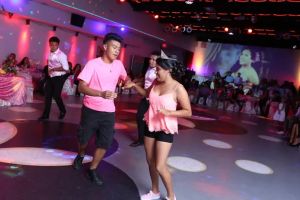
Galactic Dance Studio / quinceanera choreography near me
8501 Long Point Rd, Houston, TX 77055, USA
Share the dance floor safely
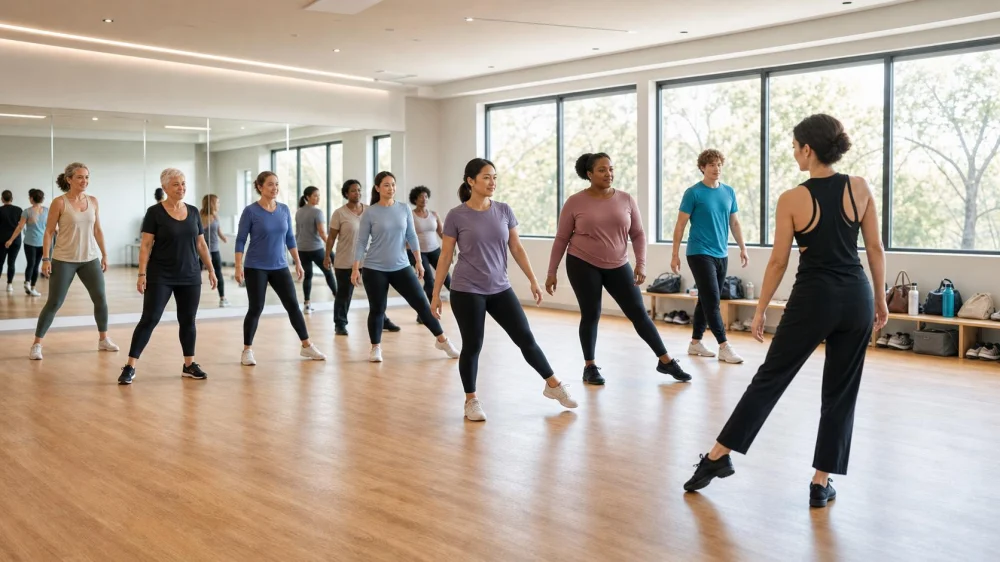
- Find a spot where you can see the instructor without blocking others.
- Keep consistent spacing rather than drifting toward the mirror.
- Learn the travel direction before moving across the floor.
- When groups cross, exit promptly through the instructed side.
- If lost, mark the movement small or stop; do not cut across active dancers.
- Respect front-line rotation so everyone can see.
- Avoid teaching your neighbour while the instructor is speaking.
Best response to a mistake: reset, rejoin at a clear count and keep the pathway predictable. Not ideal: apologizing at length in the middle of moving traffic.
Partner work and consent
- Introduce yourself and confirm preferred role or rotation rules.
- Ask before making physical contact beyond the demonstrated hold.
- Use the pressure, speed and range assigned by the teacher.
- Do not force flexibility, dips, lifts or weight-sharing.
- Release immediately if a partner says stop or changes grip.
- Rotate graciously; partner rotation is practice, not a ranking.
- Tell the instructor if height, injury, balance or comfort makes a pairing unsafe.
Consent is specific and ongoing. Agreeing to ordinary partnered steps does not imply consent to close embrace, lifts, corrections by touch or being filmed.
Ask questions and handle feedback
Use the class's question moments and keep questions tied to the current material. If the issue is personal, detailed or medical, speak after class or request another time.
- Try the correction once before explaining why it feels difficult.
- Ask whether a modification preserves the learning goal.
- Do not compare bodies, flexibility or learning speed.
- Avoid correcting classmates unless invited by the teacher or partner.
- Thank demonstrators and keep observations about movement, not appearance.
Recording, mirrors, and privacy
Ask the instructor and every identifiable participant before recording. A studio's general media waiver may not mean personal filming is allowed during class.
- Record only during designated time and from an approved location.
- Frame yourself when others have not consented.
- Do not live stream a class without explicit permission.
- Ask again before posting a partner or teacher online.
- Keep changing areas, minors and private conversations out of all footage.
- Use mirrors for alignment and awareness, not prolonged self-criticism or blocking.
If you arrive late or need to leave early
Check the studio's policy. Enter quietly, wait for acknowledgment and join where directed. Do not enter fast movement without a warm-up. If too much preparation was missed, observing may be safer than joining.
Tell the teacher before class if you must leave early, position near an exit and depart between exercises. Do not cross an active group or leave without collecting belongings from a safe route.
Health and safety notes
This article provides general class etiquette, not medical or technique instruction. Stop for sharp pain, dizziness, faintness, chest symptoms or loss of control. Seek urgent care for emergency symptoms and follow qualified healthcare advice for injuries or health conditions.
Studio rules, cultural practices and terminology vary by dance form. Ask rather than assuming a custom is universal, and expect instructors to explain consent and safety requirements clearly.
Frequently asked questions
Is it rude to stand in front as a beginner?
Not automatically. Follow rotation and spacing rules. A position with a clear view may improve learning if it does not block others.
Should I apologize after bumping someone?
Check that they are okay, apologize briefly and restore safe spacing. Report an injury to the instructor.
Can I decline partner rotation?
Yes. Tell the instructor what you need. A responsible class should provide a respectful alternative when feasible.
May I film the final combination?
Only with studio and participant permission during designated recording time.
What if I cannot keep up?
Reduce range, mark the rhythm or step aside safely and observe. Ask for the key starting point rather than forcing speed.
Next steps
Before your next class, confirm footwear, arrival and recording rules. During class, prioritize predictable spacing, consent and listening. Afterward, note one etiquette question and one movement question to ask at an appropriate time.

 Poinciana Academy of Fine Arts4.0 (55 reviews)
 Dreamflight Theatrical Gymnastics, Inc.5.0 (19 reviews)
 Triple Threat Performing Arts LLC, Coral Springs, FL5.0 (23 reviews)
 Blue Label Band5.0 (24 reviews)
 Royale Ballet Dance Academy4.0 (57 reviews)
 Purpose Dance Academy5.0 (4 reviews)
 How I Learned to Use Motion-Sensing Floors in My Dance Studio
 How to Create a Dance Practice Schedule That You'll Actually Stick To
 How to Find a Dance Class with a Focus on Community
 How I Prepared My First Solo Performance — A Journey of Self‑Discovery
 What is Waacking? Punking and Arm Movements Explained for Dancers
 The Benefits of Cross-Training with Other Forms of Exercise for Better Performance