
How I Used Musical Structure to Transform My Choreography Practice
- Why Music Became the Missing Piece in My Choreography
- Music Theory Tools That Changed My Dance Thinking
- My Step-by-Step Learning Path
- How I Applied These Ideas in Real Choreography
- Early Mistakes That Actually Helped Me Improve
- A Performance That Changed My Perspective
- What This Means for Dancers Today
Why Music Became the Missing Piece in My Choreography
For a long time, I thought choreography was mostly about movement vocabulary—how many steps you know, how flexible you are, how well you can memorize sequences. But something always felt slightly off in my work. The movements were correct, but they didn’t feel alive.
The turning point came during a rehearsal where a mentor asked a simple question: “Do you understand what the music is doing here, or are you just counting beats?” That question changed everything. I realized I was dancing on top of music, not inside of it.
That’s when I began exploring how music theory to improve choreography could reshape my entire creative process. I didn’t expect it to change not just my timing—but my storytelling.
Music Theory Tools That Changed My Dance Thinking
Understanding Rhythm Beyond Counting
I used to think rhythm was just 8-counts. But music theory introduced me to subdivisions, syncopation, and polyrhythms. Suddenly, I wasn’t just “on beat”—I was inside layers of rhythm that opened new movement possibilities.
Crunch Fitness - Ballantyne / crunch fitness ballantyne
CharlotteMecklenburg CountyNorth Carolina
16045 Johnston Rd A, Charlotte, NC 28277, USA
Melodic Contour and Physical Shape
When I started listening to melody direction—whether it rises, falls, or stays static—I began shaping movement accordingly. A rising melody naturally became expansion in the body, while descending phrases turned into grounded transitions.
Harmonic Emotion as Choreographic Mood
Chord changes became emotional cues. A major-to-minor shift often signaled emotional contrast in my choreography, allowing me to build tension and release more intentionally.
My Step-by-Step Learning Path
Stage 1: Listening Without Movement
At first, I stopped dancing entirely. I just listened to songs repeatedly, mapping structure: intro, verse, chorus, bridge. I wrote notes like a musician rather than a dancer.
Stage 2: Translating Sound into Shapes
Next, I assigned physical meaning to sound elements. A snare hit became a sharp arm contraction. A bass drop became weight shift. This was where musical structure started to guide movement creation.
Stage 3: Building Full Sequences
Only after understanding structure did I start building choreography. Instead of forcing steps into music, I let the music dictate transitions and accents.
At this stage, I began training at Creative Edge Dance Studio, where instructors encouraged breaking choreography down by musical layers instead of fixed counts. That environment accelerated my growth dramatically.
How I Applied These Ideas in Real Choreography
One of my first full applications was a contemporary piece set to a piano-driven track. Instead of starting with movement ideas, I marked the score like a musician.
Structural Mapping
I divided the track into micro-sections based on harmonic shifts. Each section had a distinct movement identity rather than repeating phrases.
Dynamic Contrast
Soft passages used suspended, delayed motion. Loud sections used grounded, percussive movement. This contrast made the choreography feel like it was breathing with the music.
Improvisation Within Musical Rules
I allowed improvisation—but only within musical boundaries. For example, I could change movement style but not ignore harmonic changes. This balance created both structure and freedom.
Early Mistakes That Actually Helped Me Improve
At the beginning, I made a common mistake: overanalyzing music. I tried to match every single sound with a movement, which made the choreography feel forced and unnatural.
Another issue was ignoring silence. I used to think silence in music was “empty,” but in reality, it’s one of the most powerful choreographic tools. Learning to move through silence improved my timing more than anything else.
I also struggled with consistency. Sometimes I would deeply analyze a track; other times I would rely on instinct. Eventually, I learned that the best choreography comes from combining both structured analysis and intuitive response.
A Performance That Changed My Perspective
One of the most memorable moments in my journey happened during a small showcase performance. I had choreographed a trio piece using full musical analysis for the first time.
After the performance, a viewer told me, “It felt like I could hear the music through your movement, even with my eyes closed.” That comment stayed with me because it confirmed something I had been learning: choreography is not decoration of music—it is interpretation of it.
That piece later became a teaching example at Creative Edge Dance Studio, where students began exploring music theory as part of choreography training.
What This Means for Dancers Today
Understanding music theory doesn’t mean becoming a musician. It means learning to listen differently. When dancers start recognizing structure, rhythm layers, and harmonic emotion, choreography becomes less about memorization and more about communication.
Modern choreography—especially in commercial dance, contemporary performance, and even street styles—is evolving toward deeper musical awareness. Dancers who understand music at this level naturally stand out because their movement feels intentional rather than reactive.
If you're beginning this journey, start small. Pick one song and map its structure. Listen without moving. Then slowly add movement based on what you hear, not just what you count.
Studios like Creative Edge Dance Studio often provide structured training environments where this kind of musical awareness is developed step by step, helping dancers turn intuition into skill.
The more I worked with music theory in choreography, the more I realized something simple: better listening creates better dancing. And better dancing creates stronger storytelling.
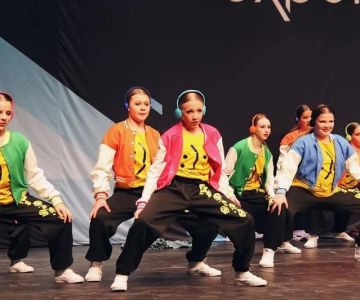
 Kun-Yang Lin/Dancers (KYLD)5.0 (1 reviews)
 Attitude Dance Center5.0 (11 reviews)
 ISD 728 Community Education4.0 (7 reviews)
 Kyunghee K-Pop Dance0.0 (0 reviews)
 King & Roberts Studio of Dance4.0 (63 reviews)
 Jazzercise Barre Fitness Center4.0 (17 reviews)
 My Story of Learning to Use VR Headsets in Daily Dance Practice
 The Best Arm Toning Exercises for Dancers
 What is Folk Dancing? Cultural Traditions from Around the World
 How I Learned to Create a Dance Warm-Up That Works for Me — My Personal Journey
 My Experience With Dance and Aging — Staying Agile with Dance
 What is Stepping? Fraternity and Sorority Traditions