
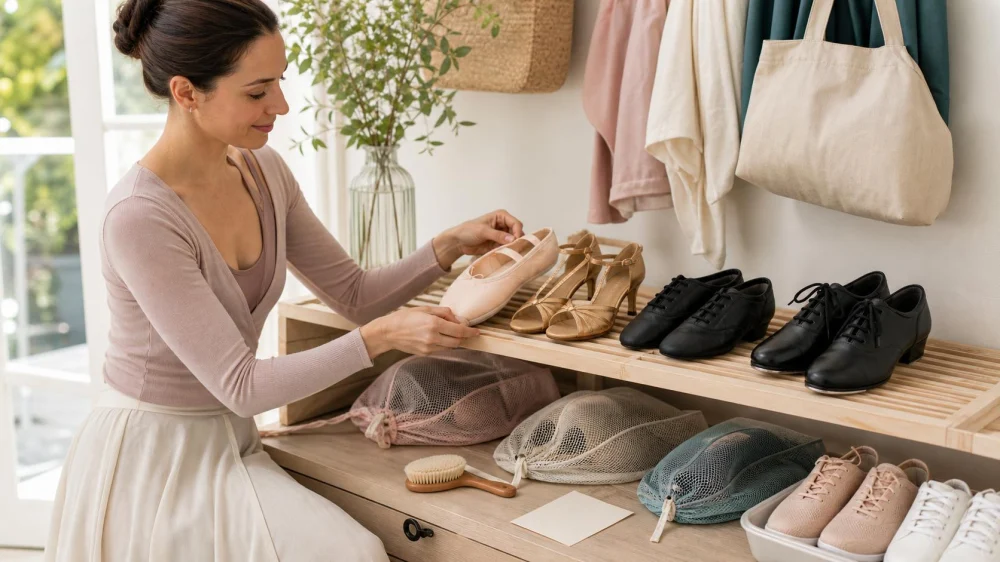
How to Store Dance Shoes Between Classes Without Damage
On this page
Quick answer
After class, remove dance shoes from a sealed bag, loosen laces or straps, wipe away surface dirt with the material-appropriate method, and let them air-dry at room temperature away from direct heat and sun. Store each clean, dry pair in a breathable bag with closures protected and heels supported. Keep street shoes separate, and inspect soles, stitching, shanks, taps, elastics, and fasteners before the next class.
Manufacturer and dance-teacher instructions come first because ballet slippers, pointe shoes, jazz shoes, ballroom shoes, tap shoes, sneakers, and character shoes use different materials and construction.
Arlington Ballroom LLC / arlington ballroom
ArlingtonArlington CountyVirginia
5130 Wilson Blvd, Arlington, VA 22205, USA
Identify the shoe material and use
Check whether the upper is leather, suede, satin, canvas, mesh, or synthetic, and whether the sole is full, split, suede, hard leather, rubber, or fitted with taps. Save the product care instructions and note whether the shoe is for indoor studio use only.
Do not use one cleaning product across every pair. Water, oils, detergent, polish, disinfectant, or stiff brushing can stain fabric, harden leather, alter suede, weaken adhesive, or change floor grip.

Jam Box Fitness Lounge / jambox galleria
Farmers BranchDallas CountyTexas
13450 Inwood Rd Suite 100, Farmers Branch, TX 75240, USA
Let shoes dry after class
Open the dance bag soon after returning home. Remove socks, toe pads, inserts, and other removable items when the maker permits. Place shoes in a ventilated room on a clean dry surface with air circulating naturally.
Avoid radiators, hair dryers, clothes dryers, heated floors, closed cars, and direct intense sunlight. Rapid or uneven heat can shrink, warp, delaminate, or weaken materials. Do not pack damp shoes tightly with clothing.
Clean only as directed
Brush away loose dry dirt with a dedicated soft tool and wipe smooth surfaces only using the approved method. Suede soles often need a specific brush, while satin and performance finishes may mark easily. Ask the studio how to handle floor residue.
Do not machine-wash or fully soak shoes unless the manufacturer explicitly allows it. Avoid fragrance sprays that merely mask moisture. If a pair has persistent odor, visible growth, pest exposure, or contamination, isolate it and ask the maker or a qualified shoe professional what can be safely cleaned.
Protect shape and closures
Fasten buckles loosely so they do not scratch another shoe, close hook-and-loop tabs to keep them from catching fabric, and tie ribbons without pulling them across delicate uppers. Use soft acid-free tissue or a suitable shoe form only when it does not stretch the shoe.
Keep heavy tap or character shoes from resting on softer pairs. Use heel protectors and sole guards only as required for the dance style and floor. Never glue, nail, or alter structural parts without qualified guidance.
Choose the right storage place
Use a clean breathable shoe bag or separate ventilated compartment once the pair is dry. Store shoes away from humidity, temperature extremes, pets, insects, household chemicals, and objects that crush the toe box or heel.
Label similar pairs on the bag rather than writing on the shoe. Rotate practice shoes when appropriate and keep performance shoes covered and separated from makeup, food, and liquids.
Dance shoe storage checklist
- Remove shoes from the bag after class.
- Separate damp accessories and street shoes.
- Air-dry naturally away from heat and sun.
- Use material-specific cleaning guidance.
- Protect buckles, ribbons, hooks, and heels.
- Store dry pairs in breathable compartments.
- Keep heavy shoes off soft shoes.
- Inspect structure and grip before class.
Limitations and safety notes
- Storage cannot repair worn structural or traction components.
- Do not dance in shoes with loose taps, broken shanks, unstable heels, detached soles, sharp hardware, or unreliable closures.
- Changing sole texture can affect studio-floor safety.
- Pointe shoe readiness and replacement require qualified teacher guidance.
- Follow studio rules for indoor-only footwear and cleaning products.
Frequently asked questions
Can dance shoes stay in a mesh bag?
A breathable bag can help after shoes are fully opened and aired, but it should not remain inside a sealed larger bag while damp.
Should I put baking soda inside?
Ask the manufacturer. Powders can leave residue, affect materials, irritate skin, or spill on studio floors.
Can I wear dance shoes outdoors briefly?
Follow the shoe and studio rules. Outdoor grit and moisture can damage soles and contaminate dance floors.
How often should shoes be replaced?
There is no universal schedule. Usage, style, fit, construction, floor, and wear signs matter.
What should stay in the dance bag?
Keep a breathable shoe bag, approved brush, spare permitted fasteners, and a separate pouch for clean accessories.
Sources and evidence notes
This approach applies footwear-care principles: identify materials, limit moisture, avoid uncontrolled heat and chemicals, prevent deformation, separate contaminants, and inspect safety-critical components. Manufacturer guidance, studio floor rules, and the dance teacher determine pair-specific care.
Build a post-class routine
Set a reminder near your dance bag: unpack, separate, air-dry, inspect, then store. Photograph each new pair's care label and keep a small note of the approved cleaning method so you do not guess after a busy class.


 The Wonder Studio (presents Kindermusik)5.0 (82 reviews)
 National Academy of Artistic Gymnastics4.0 (45 reviews)
 Academy of Rising Stars Inc4.0 (7 reviews)
 Dance Fashions Superstore4.0 (205 reviews)
 The Block DFW4.0 (15 reviews)
 SHIFT Movement & Healing Arts4.0 (11 reviews)
 How to Design Your Own Dance Practice Space at Home
 How I Used Music Theory to Improve Choreography and My Creative Process
 How I Learned to Teach Dance for Film & TV — My Story
 How I Learned to Use Mixed Reality and Live Streaming Simultaneously in My Dance Show — My Story
 What is Contemporary Dance and Is It Beginner Friendly?
 Understanding Popping, Hits, Waves, and Robotics in Dance Culture